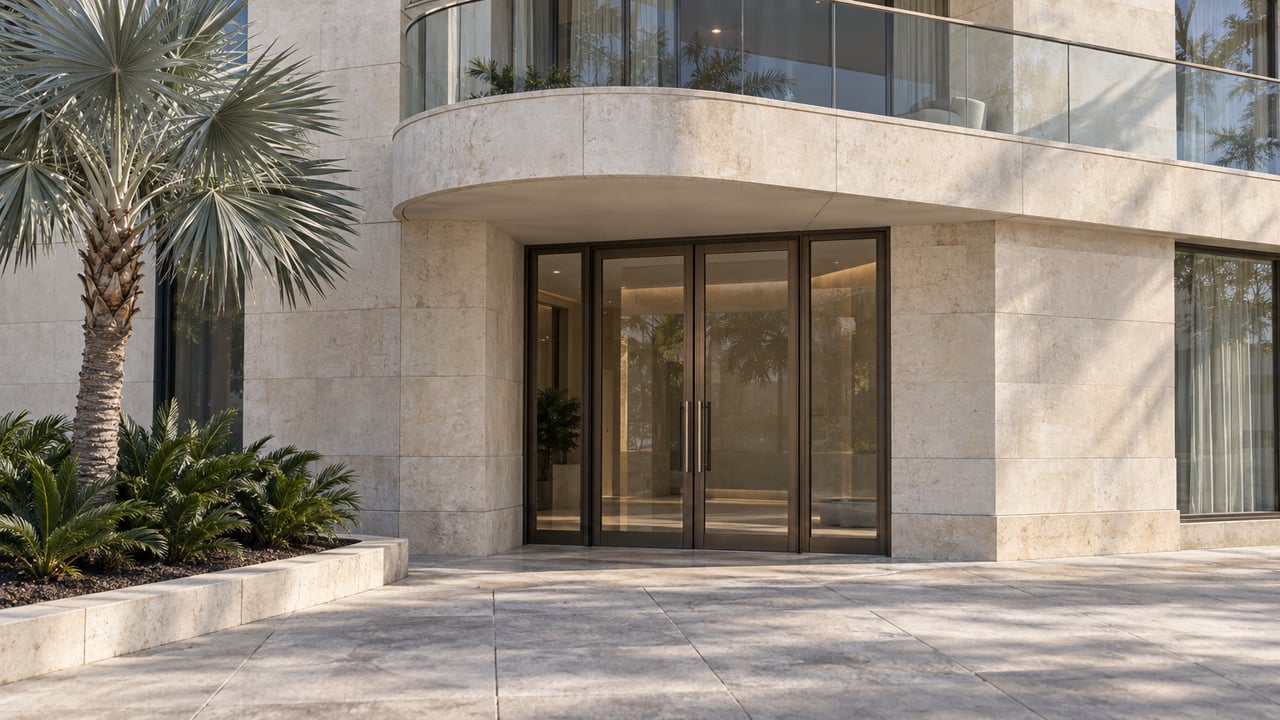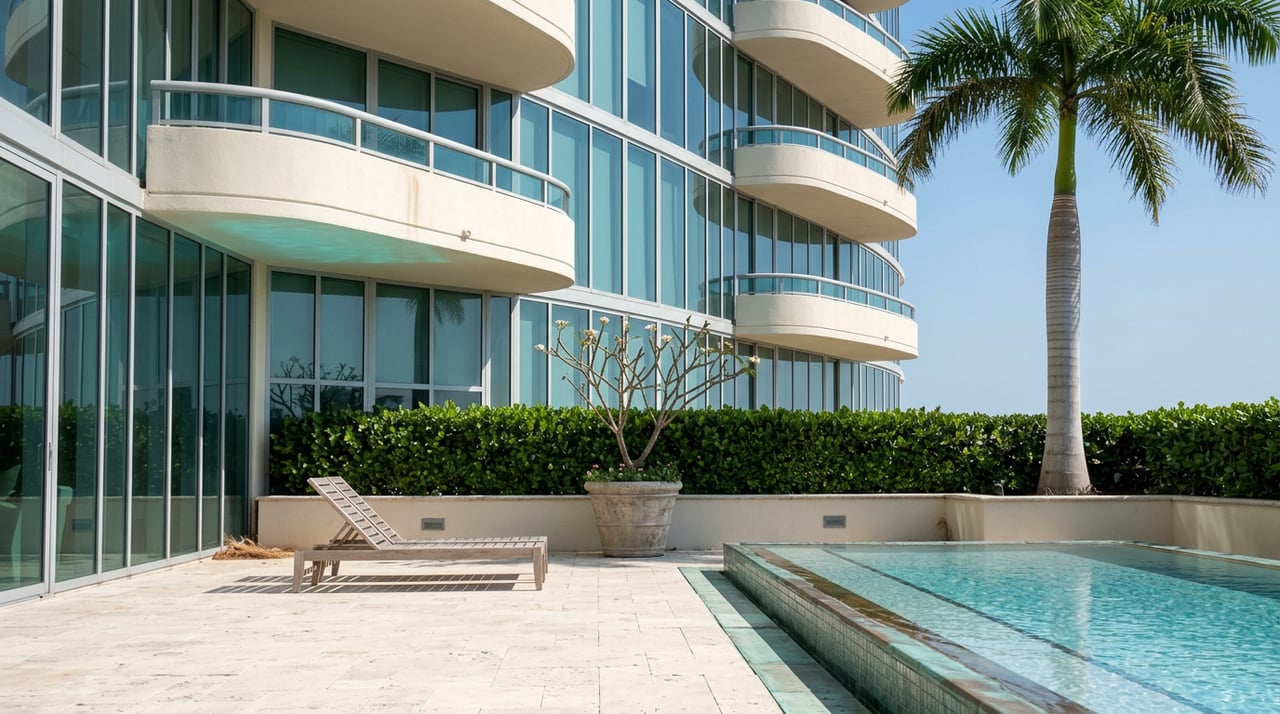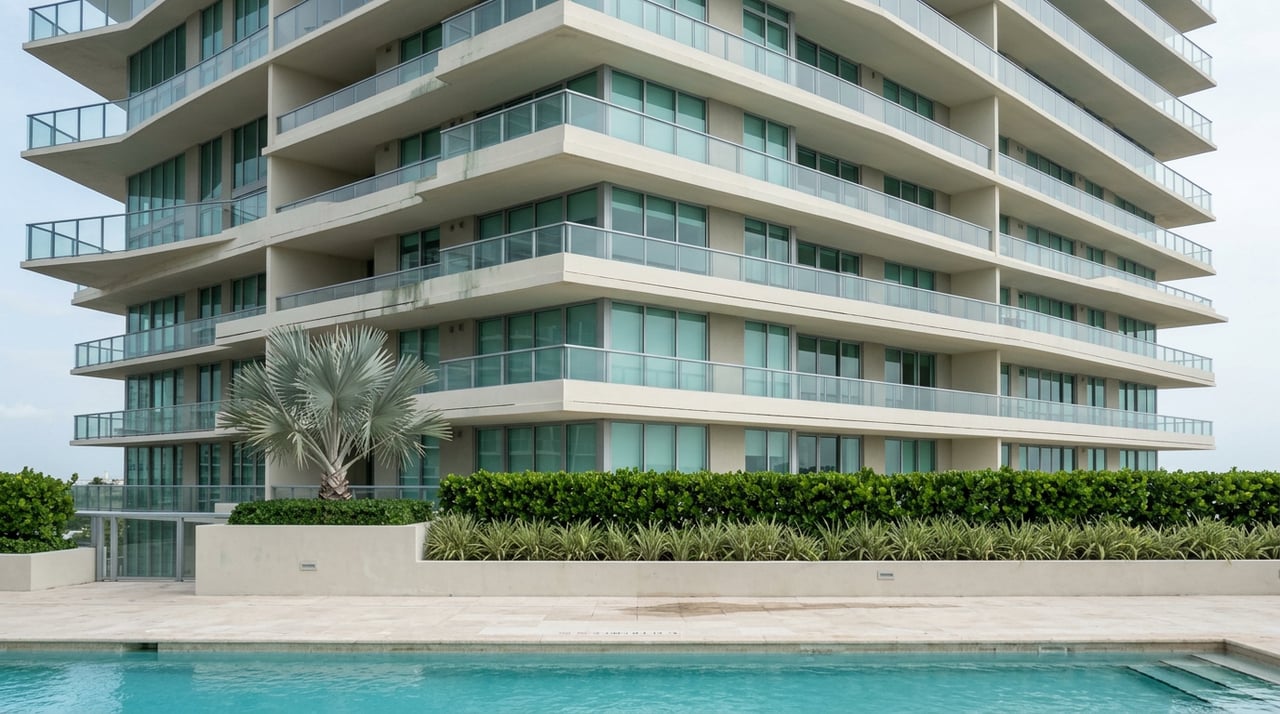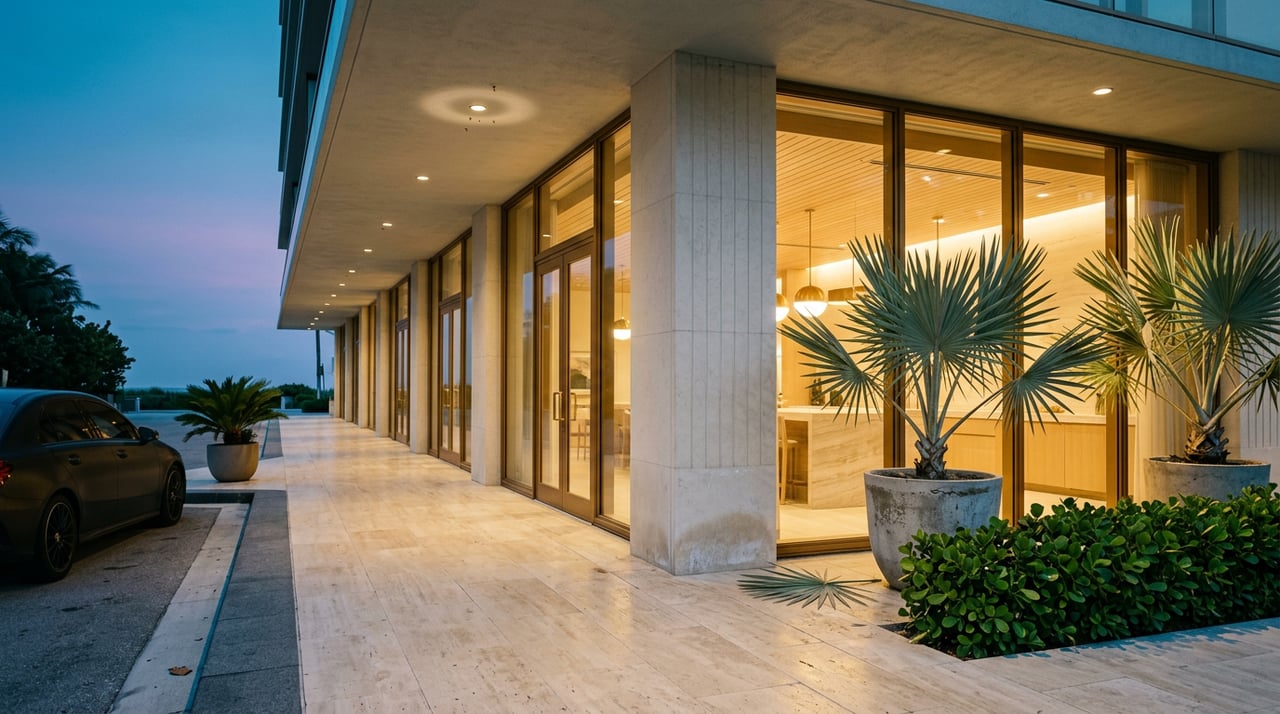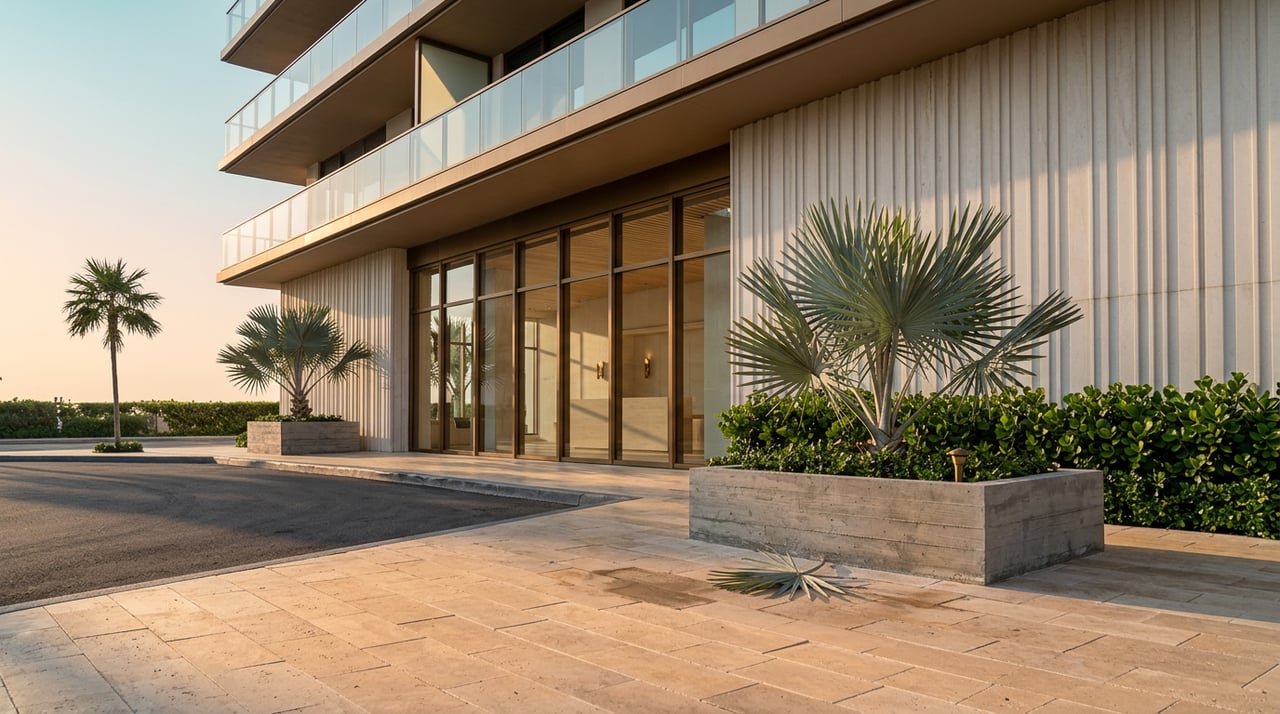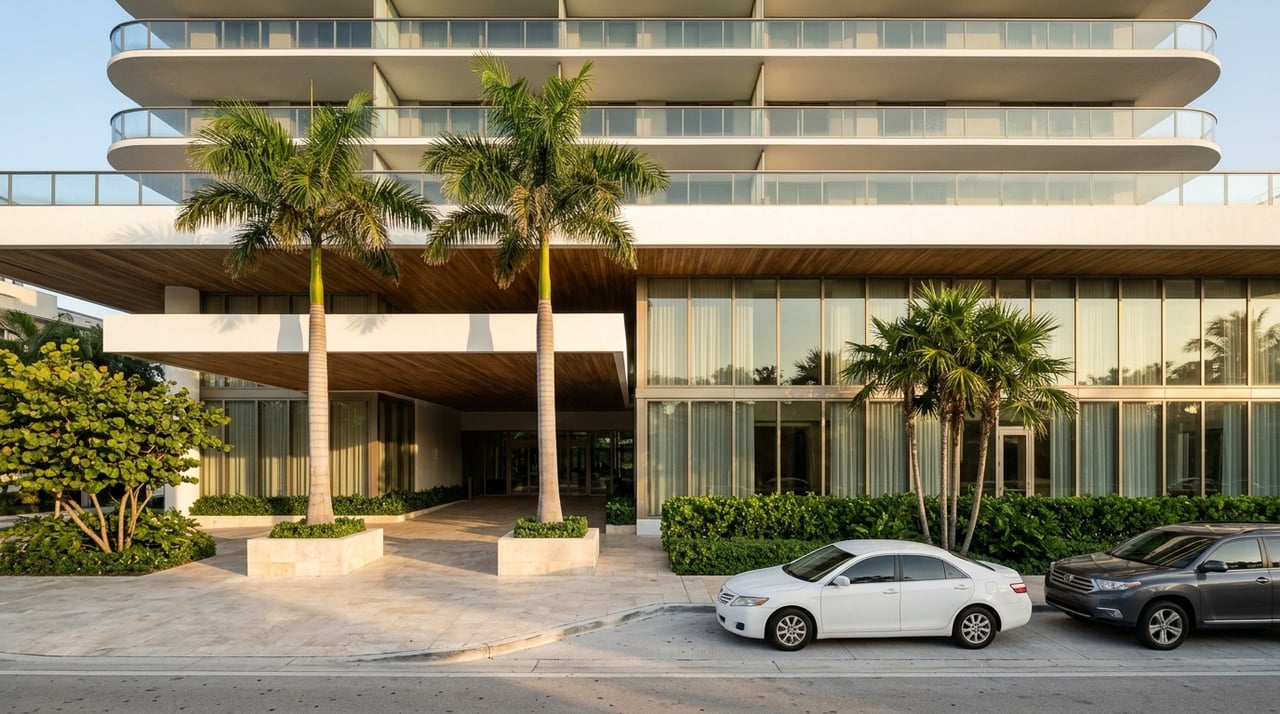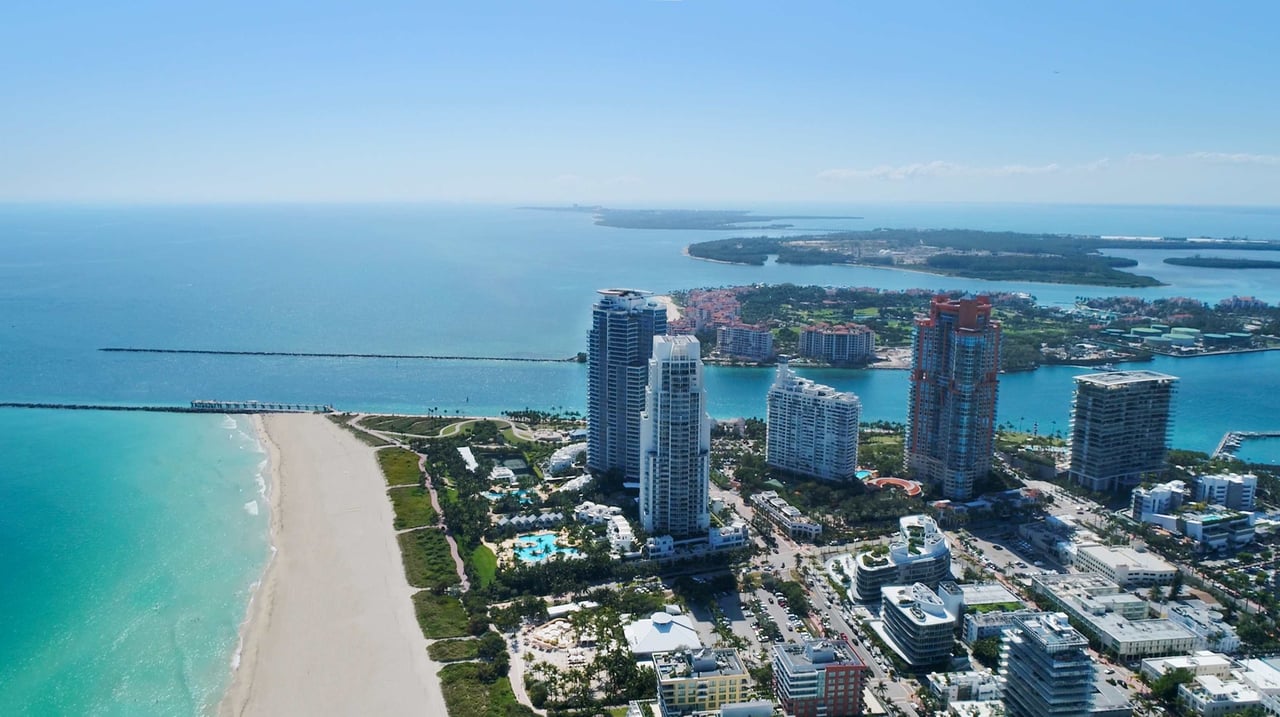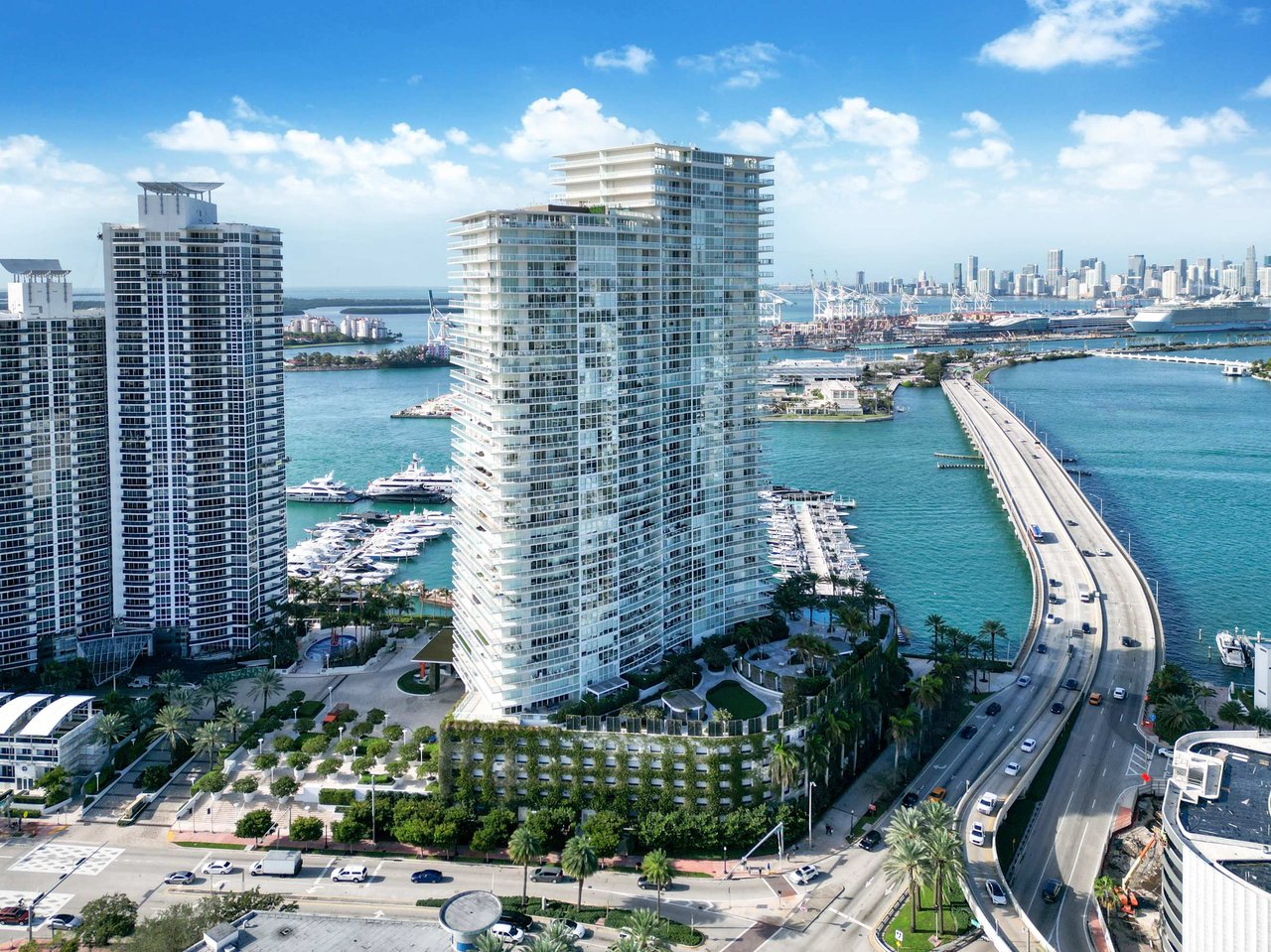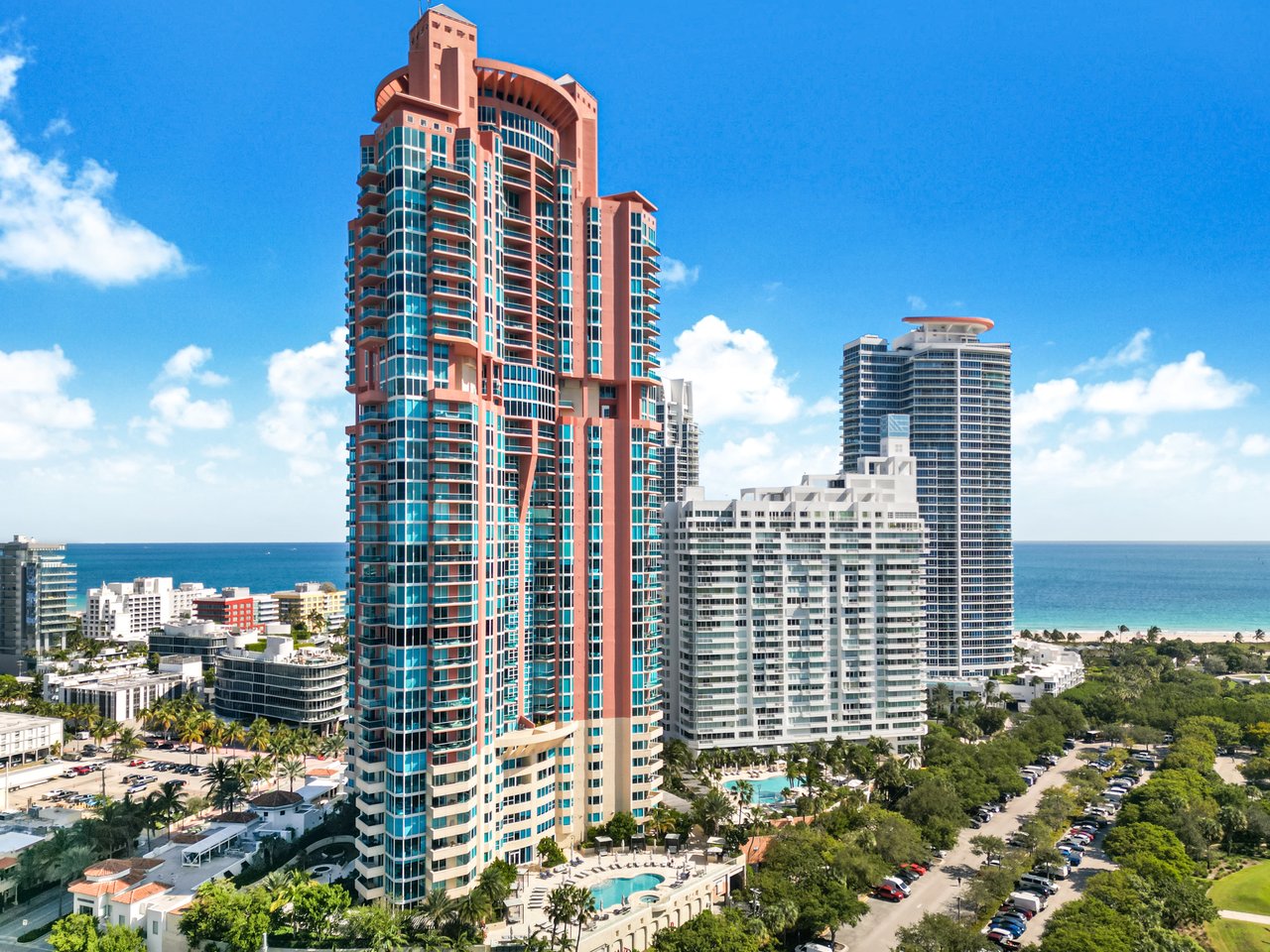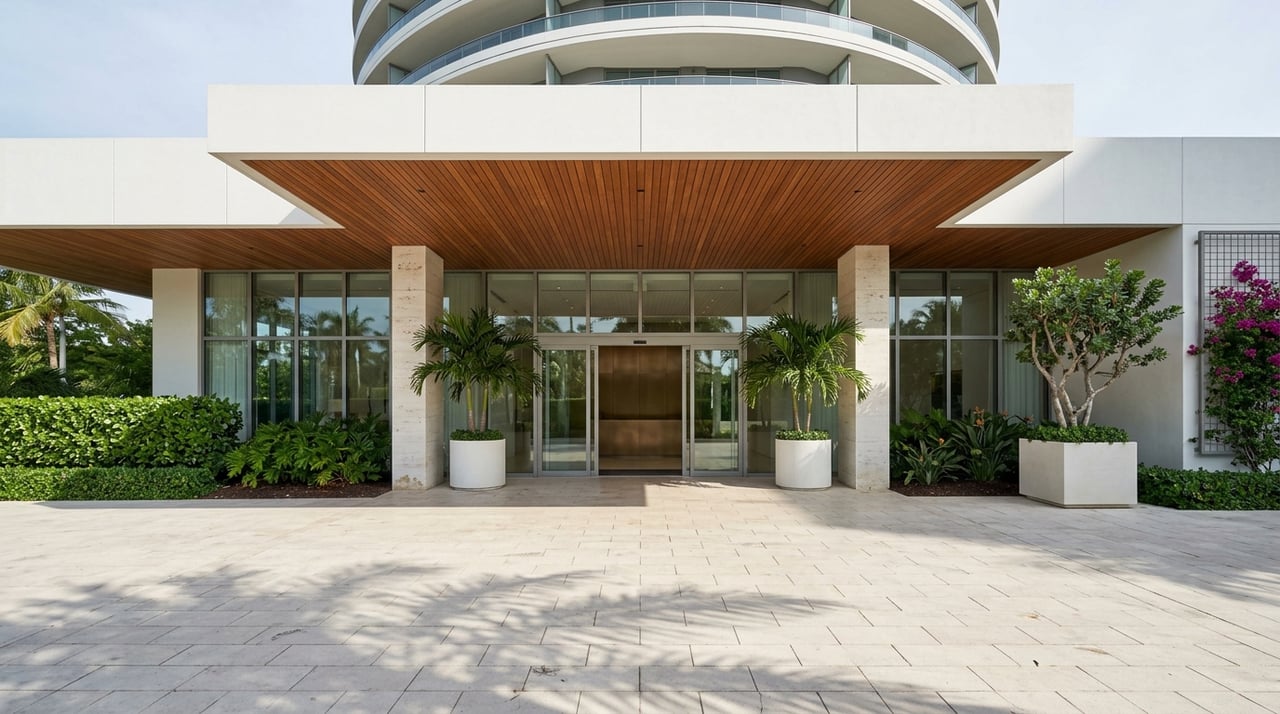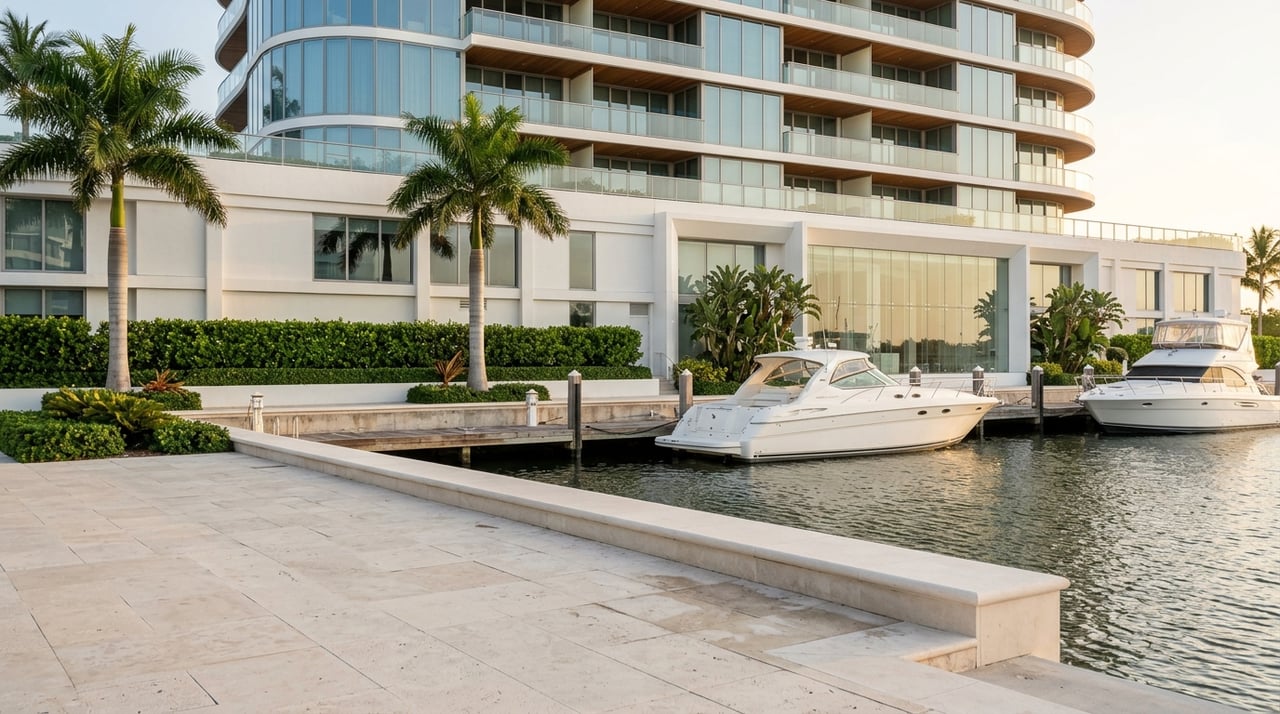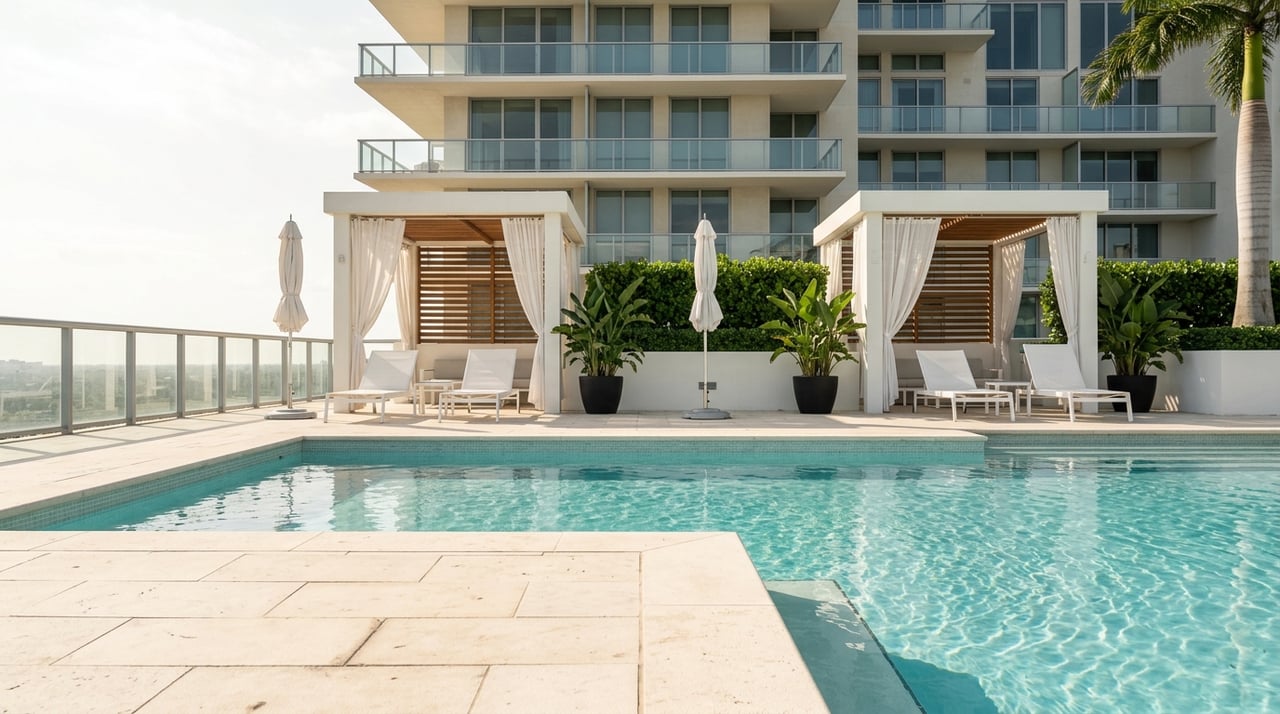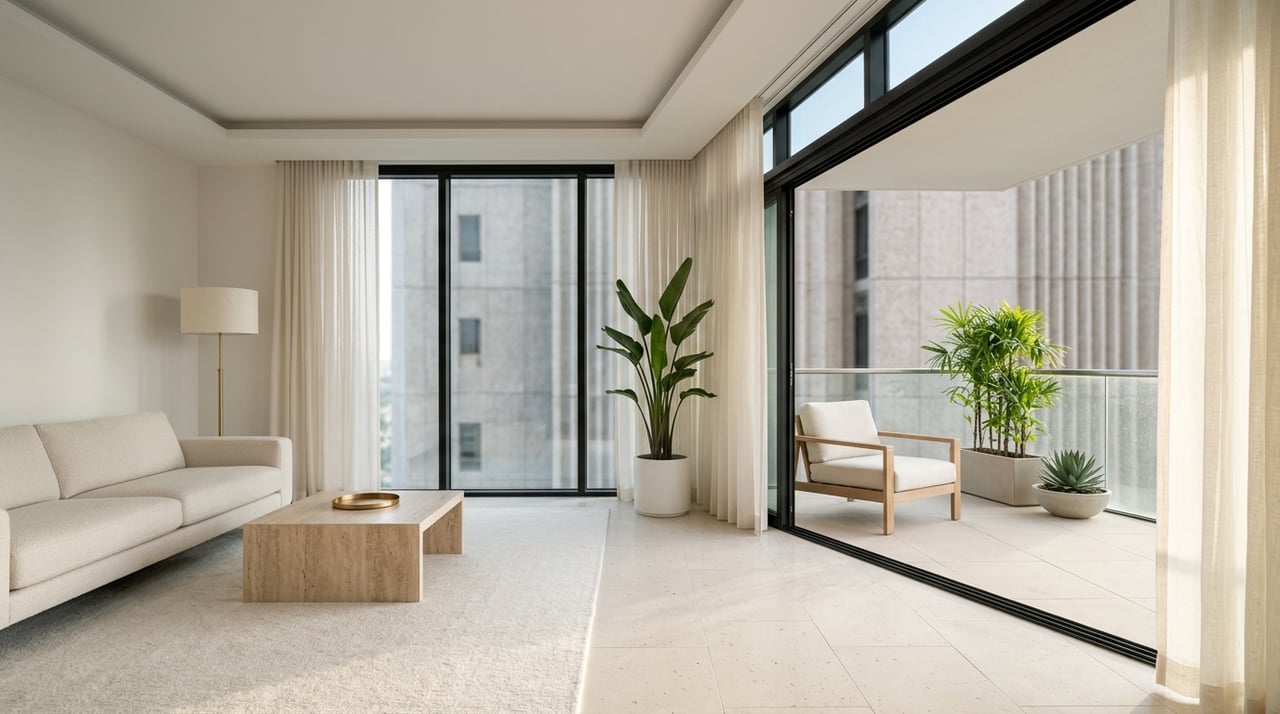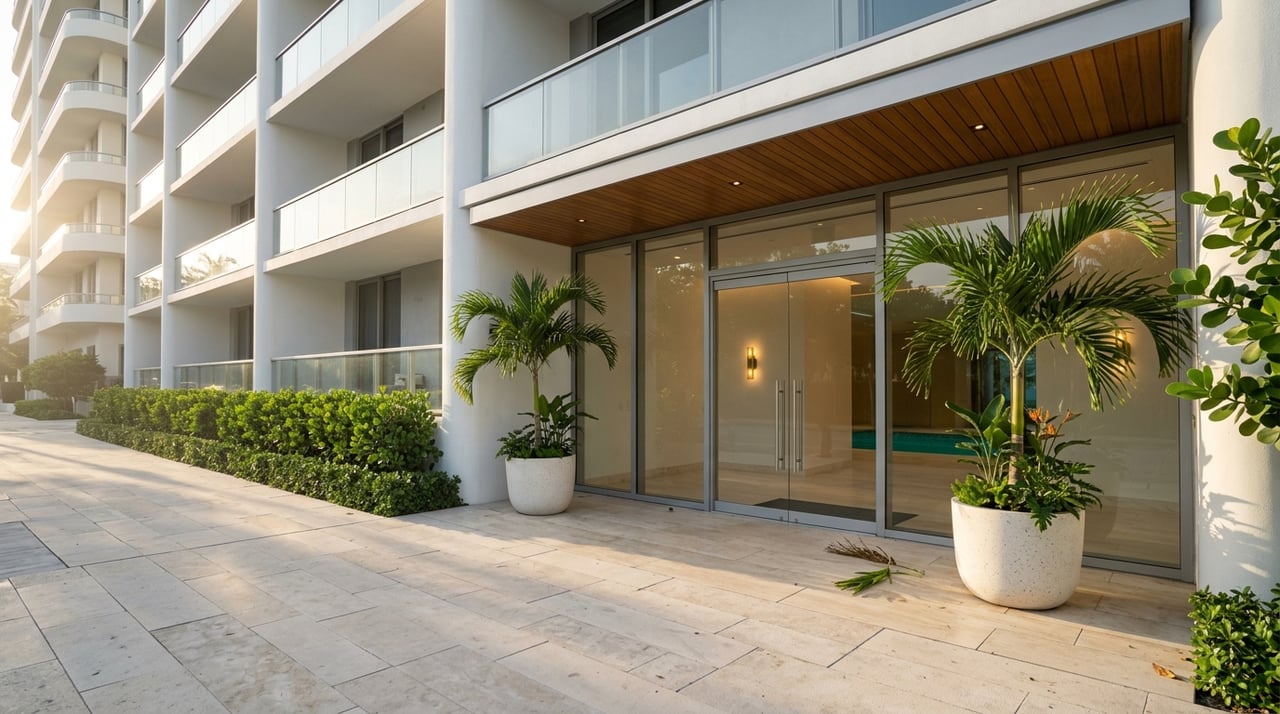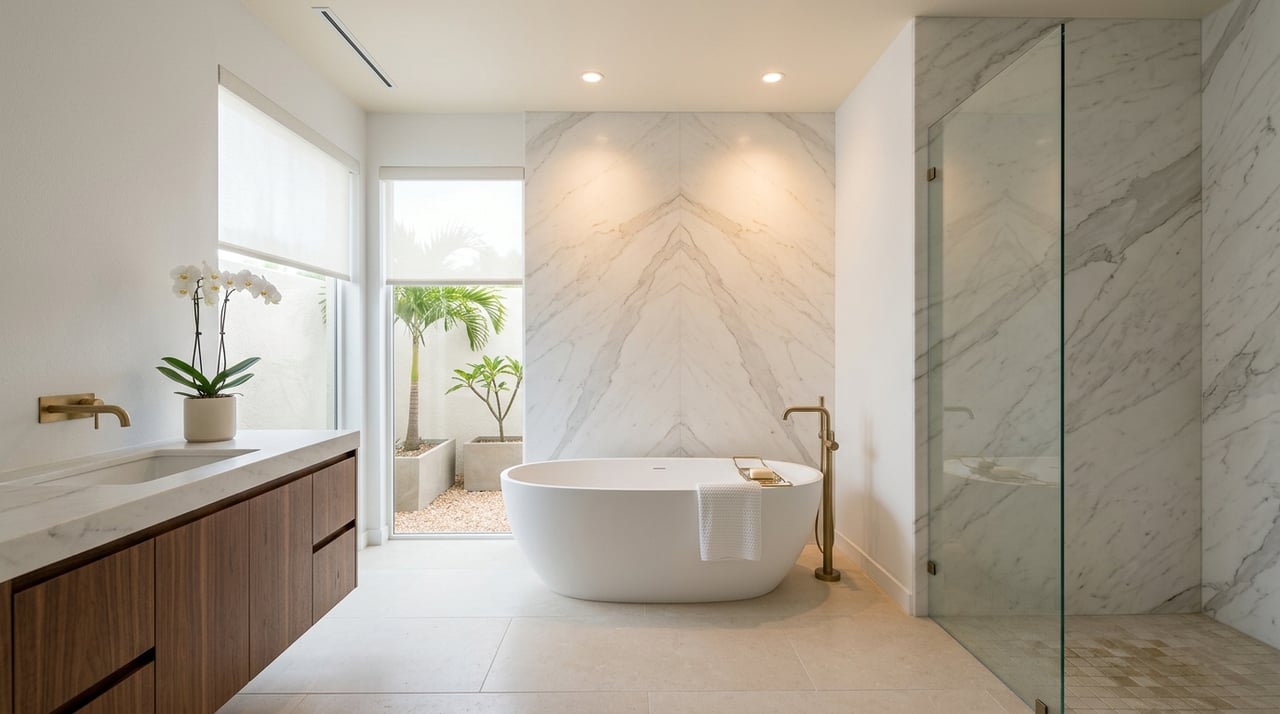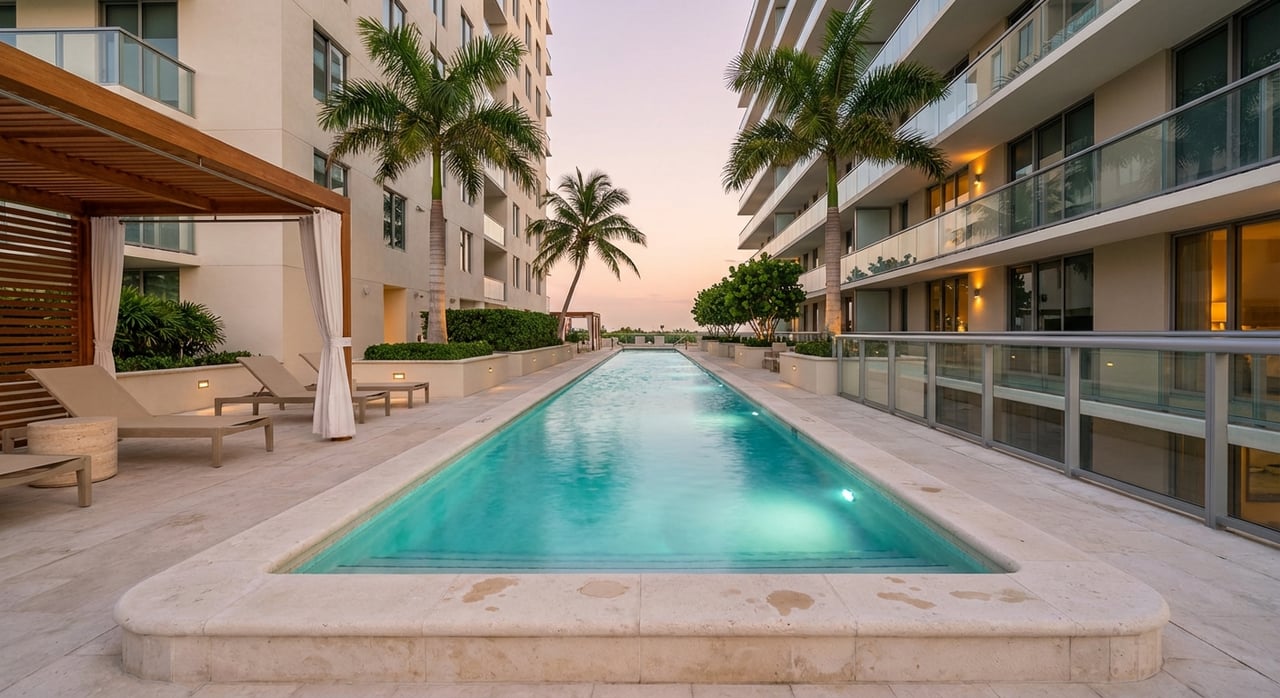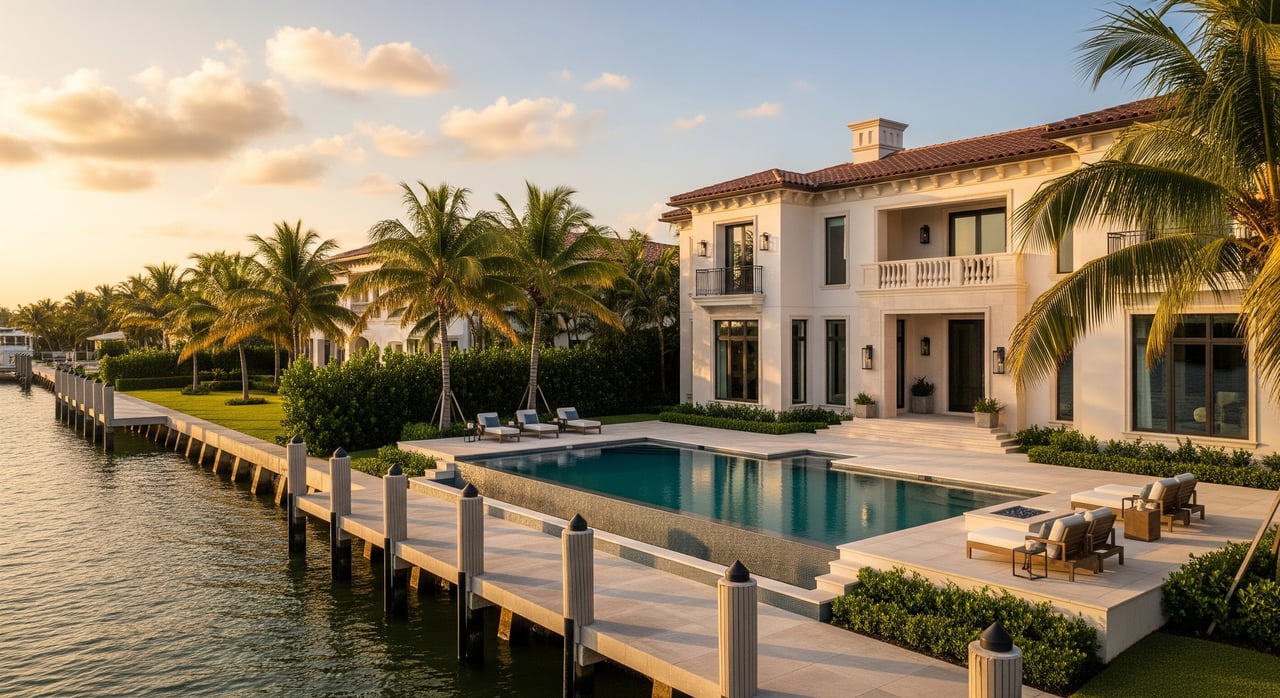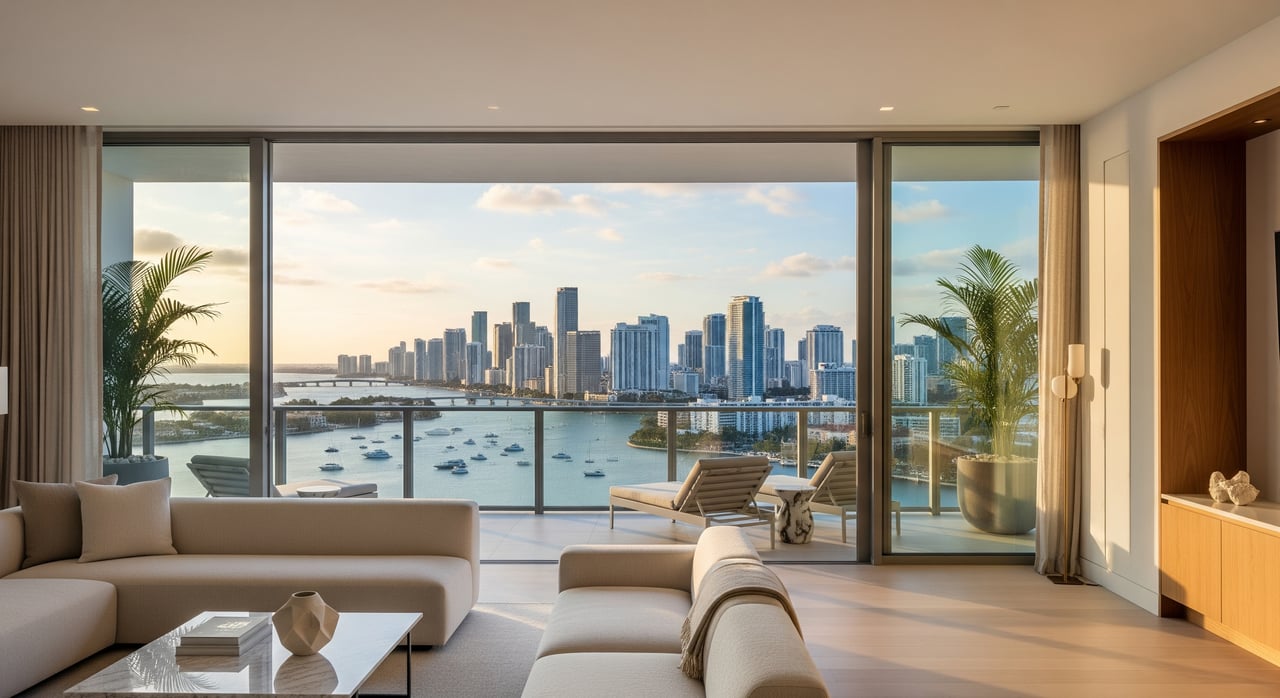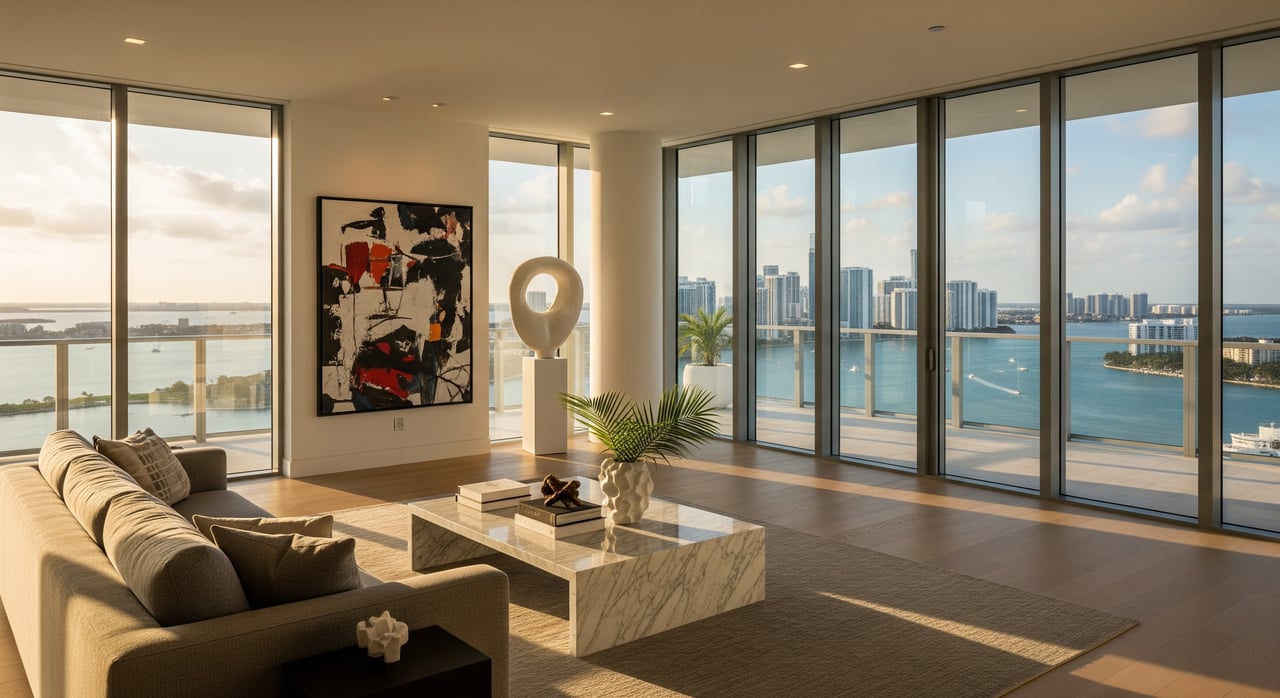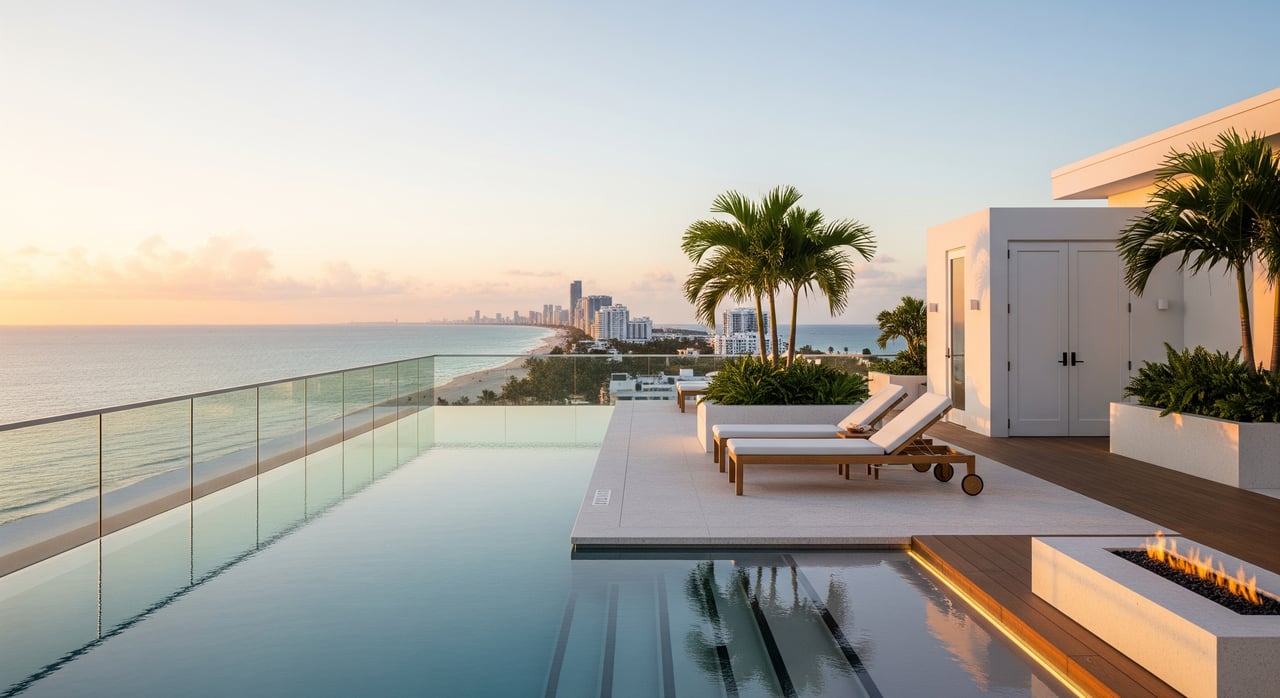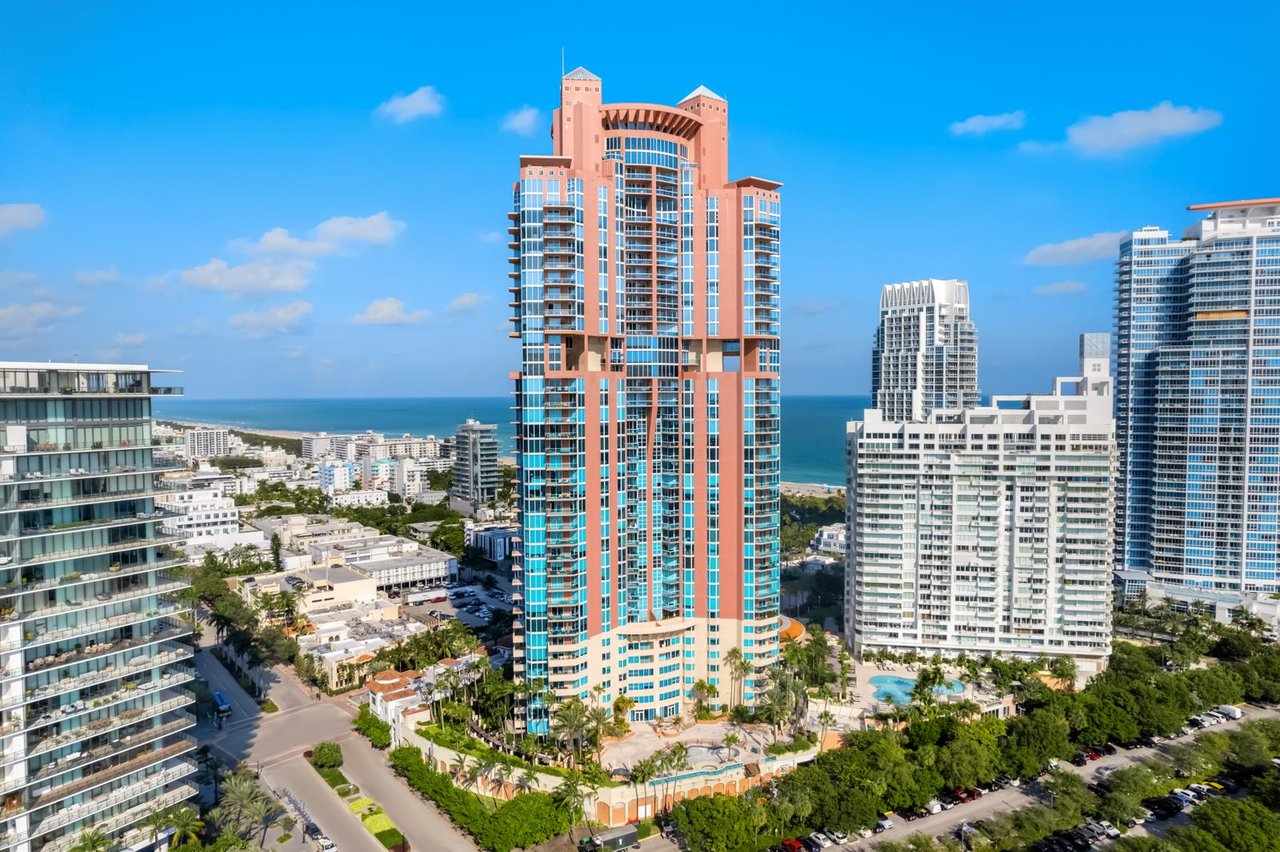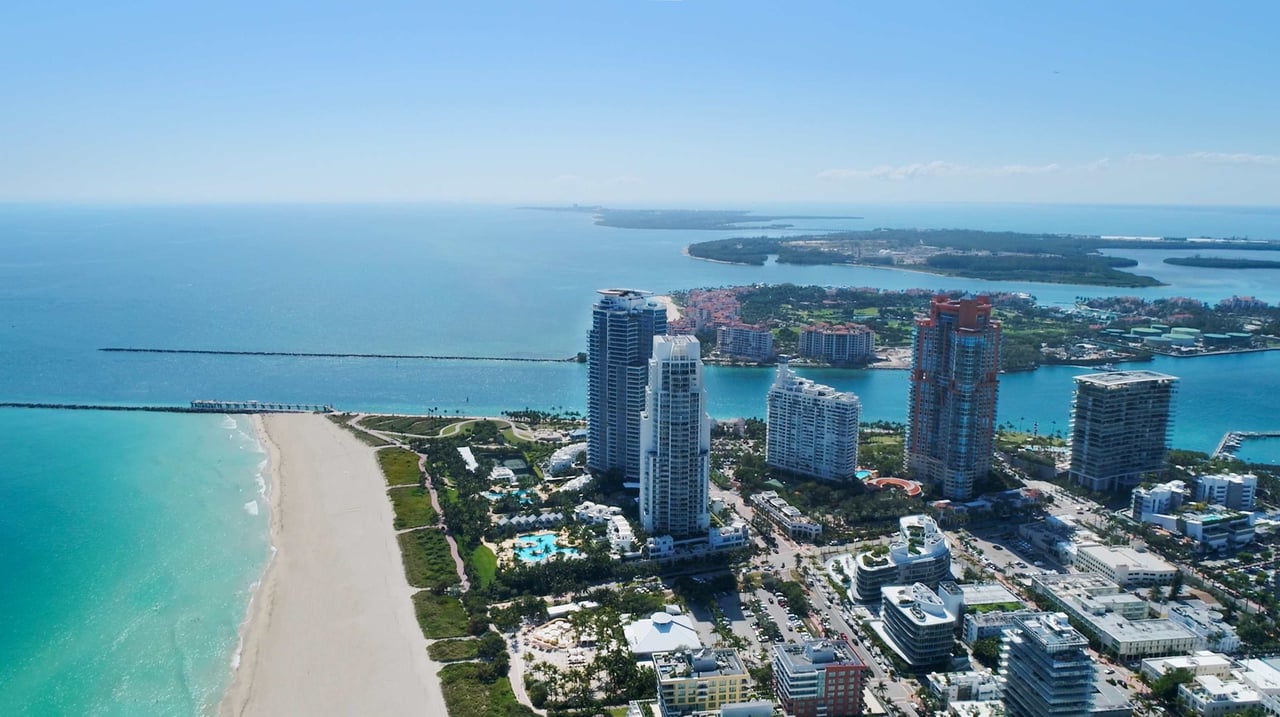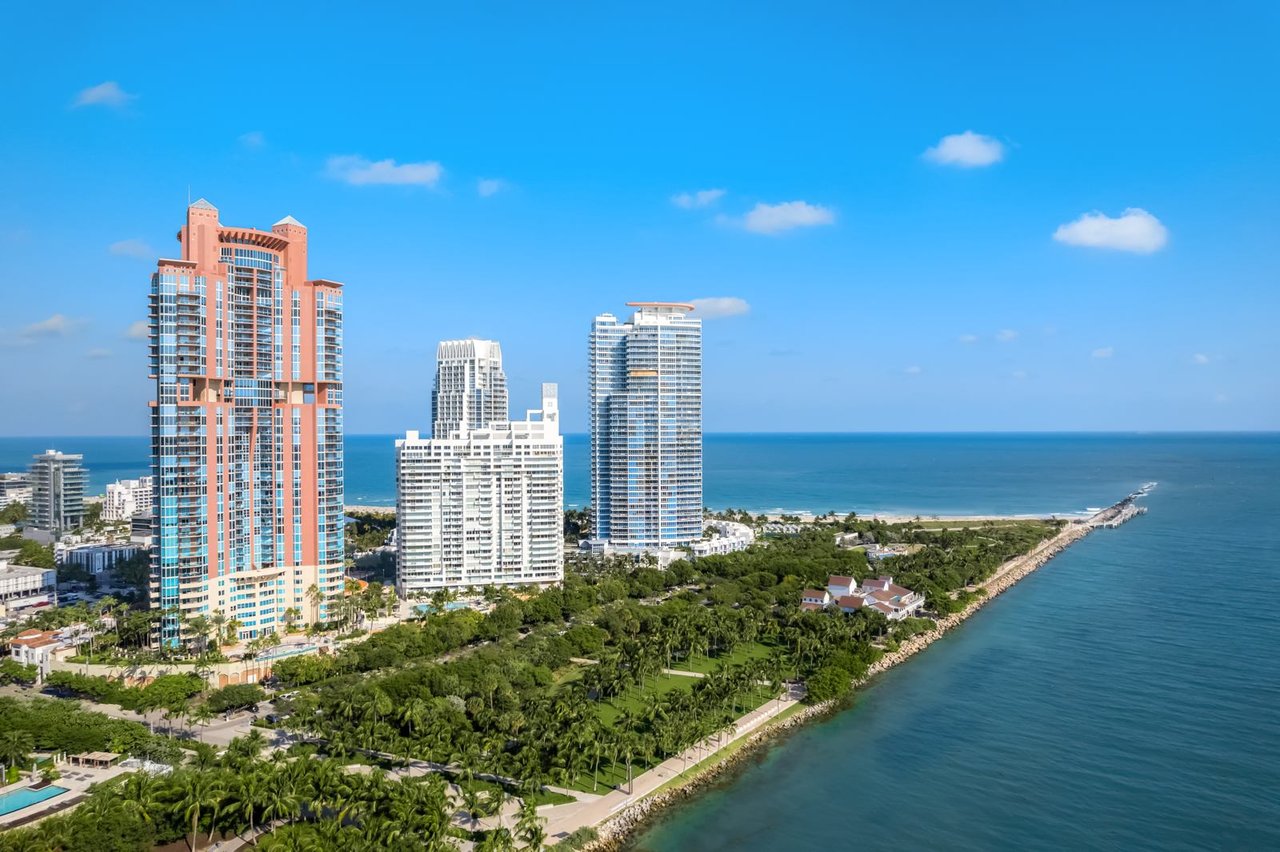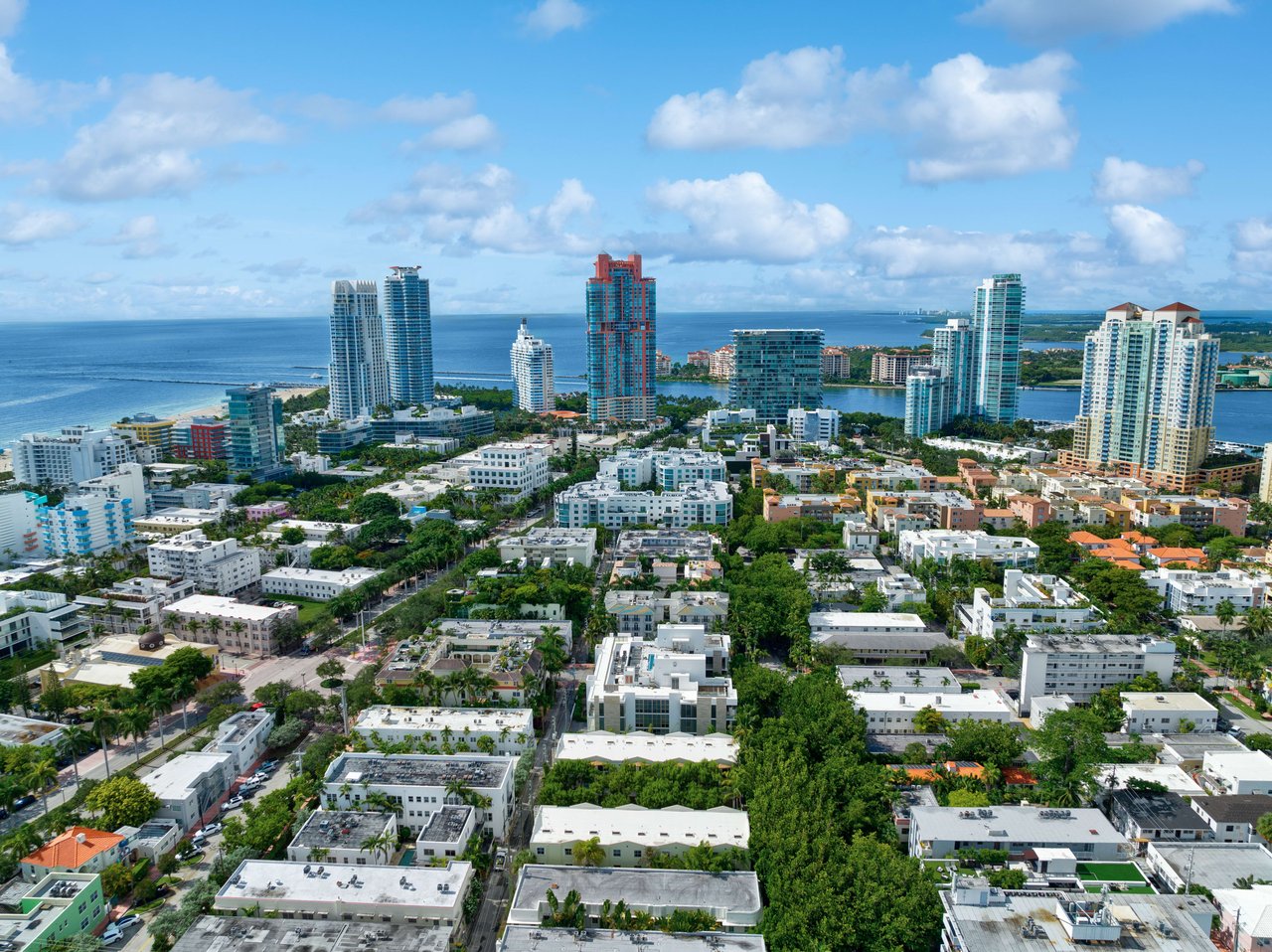
Apogee, the 67-unit tower at 800 South Pointe Drive, has asked Miami Beach to create a zoning district that covers its property and nothing else. The deal is simple. The building gets a resident-only amenity wing. In return, a covenant would bar every unit in the tower from being leased for less than six months and one day, for 30 years.
For anyone comparing South of Fifth towers, the filing shows something the price per square foot never will. Whether you can rent a unit short-term depends on the building, not the unit. A building can offer to give that right up, and here the city is being asked to trade floor area for it. Apogee is the first South of Fifth building to put a size on the trade.
What the filing asks the city to write
The applications are Planning Board files PB25-0808, which would create a new Section 7.3.13 of the Resiliency Code called the "South Pointe Overlay District," and PB25-0809, a matching Comprehensive Plan amendment. The city's own notice describes the purpose as development regulations "that incentivize non-transient residential development with private resident amenities." The overlay boundary would match Apogee's property line. No other South of Fifth building is inside it.
The numbers are small. Base floor area ratio would stay at 2.5. A bonus of 0.25 would bring the maximum to 2.75, but only for an addition of 16,000 square feet or less that is reserved for residents of the existing building. To unlock the bonus, the owner would have to do two things. The draft ordinance spells out the first one:
"Voluntarily execute a restrictive covenant running with the land, in a form approved by the city attorney, affirming that, for a term of 30 years, no residential units on the property shall be leased or rented for a period of less than six (6) months and one day."
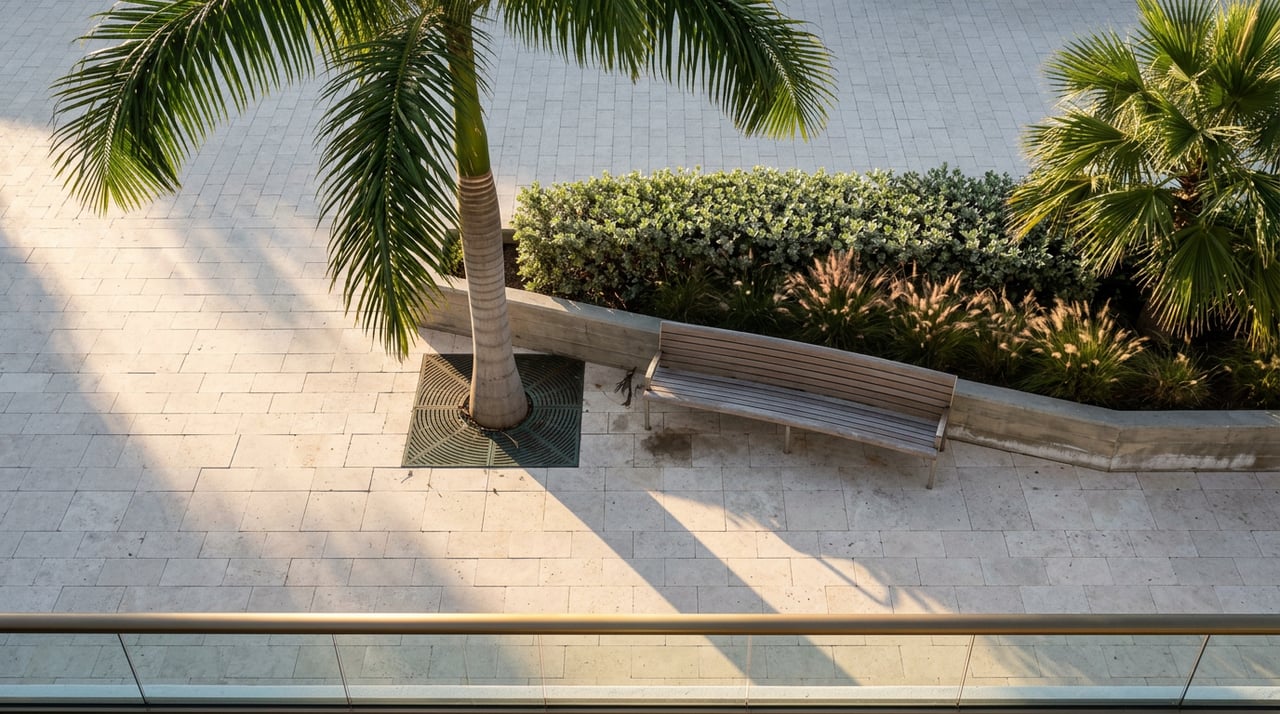
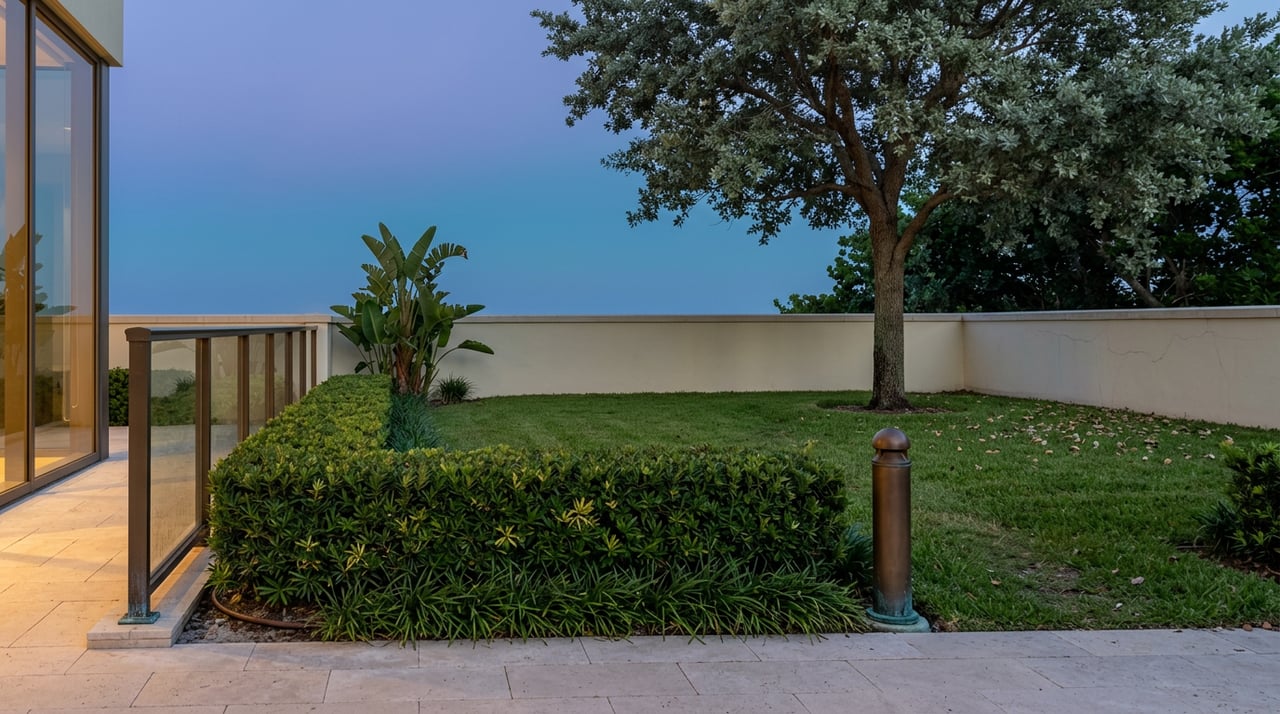
The second is to build an outdoor landscaped plaza next to two public rights of way, open to the public.
The words "six months and one day" are chosen with care. That is the line Miami Beach uses to define a vacation or short-term rental. So the covenant is not a general limit on leasing. It removes exactly the kind of rental the city regulates as short-term.
What 800 South Pointe Drive already has
This is the part that makes the trade real. Miami Beach bans rentals under six months and one day in all single-family homes and in many multifamily buildings in certain zoning districts. A city enforcement docket quoting Resiliency Code §7.5.4.11(a) lists the banned districts as RM-1, RM-PRD, RM-PRD-2, RPS-1, RPS-2, CD-1, RO, RO-3 and TH.
The city also publishes a list of "Apartment Buildings Authorized for Short Term Rental." Row 72 reads "800 S POINTE DR," with the district shown as MR. Apogee's covenant would give up a right that much of Miami Beach's housing never had.
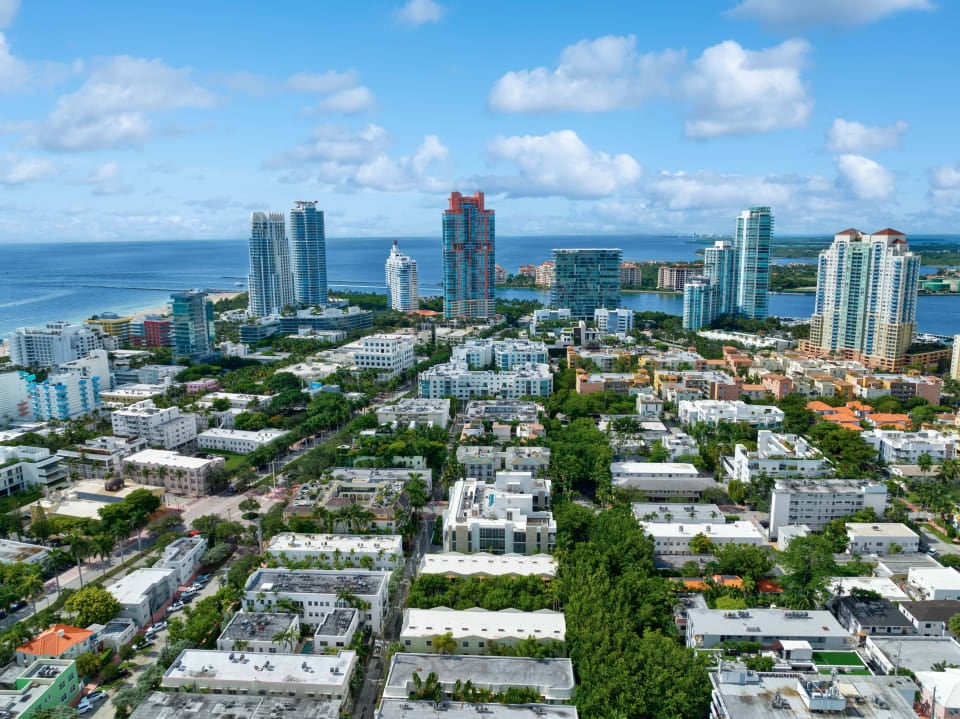
Apogee is not alone on that list. Its South Pointe Drive neighbors appear on it too:
| Address | Association name on file with the state | District shown on city list |
|---|---|---|
| 50 S Pointe Dr | Continuum on South Beach Condominium, The North Tower Association | RPS-4 |
| 100 S Pointe Dr | Continuum on South Beach, The South Tower Condominium Association | RPS-4 |
| 300 S Pointe Dr | Portofino Towers Condominium Association | RPS-4 |
| 400 S Pointe Dr | South Pointe Towers I Condominium Association | RPS-4 |
| 800 S Pointe Dr | Apogee Condominium Association | MR |
| 801 S Pointe Dr | Marea Condominium Association | CPS-1 |
The list has limits a buyer should know about. The PDF has no issue date. The city web page that links to it was last modified on January 6, 2026. Being on the list does not make an individual unit legal to rent. The city says approved rentals also need zoning approval, a Vacation/Short-Term Rental Business Tax Receipt and a Resort Tax account. Both numbers must appear in every advertisement. The list also says nothing about what a building's own condo documents allow. The city permits short-term rentals at these addresses. Each building's declaration may still restrict them.
Why an association would trade that right
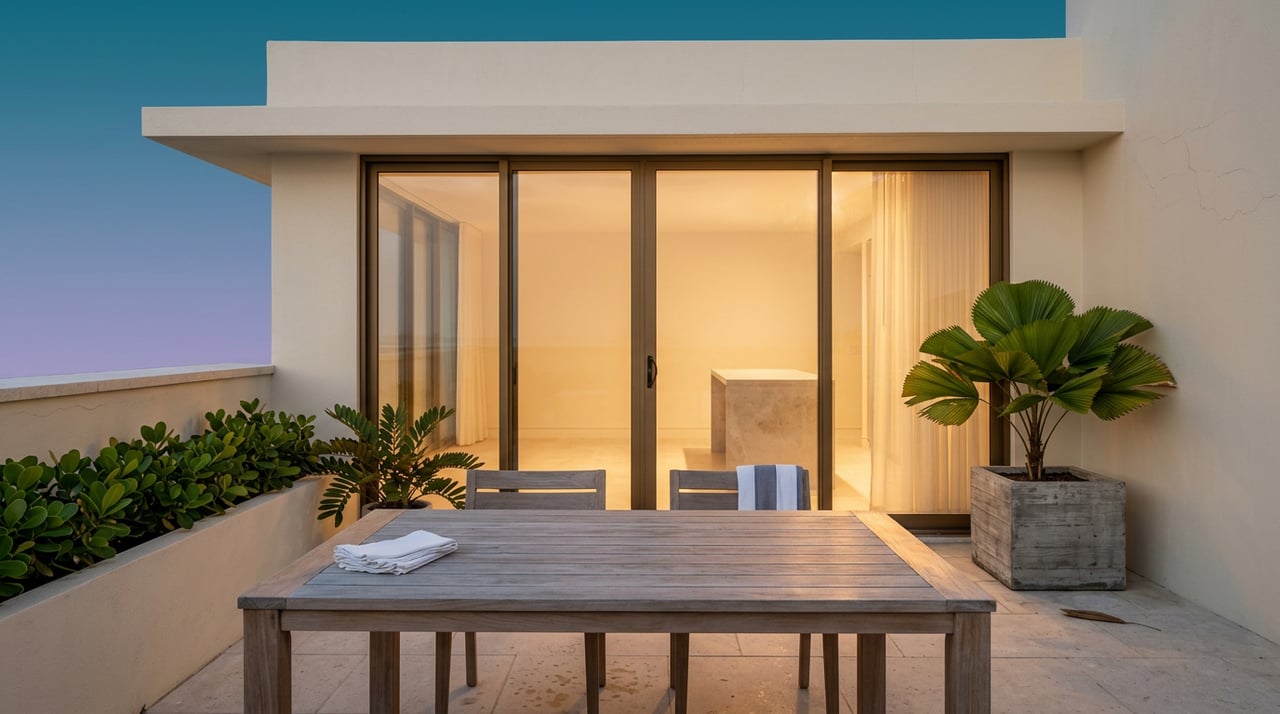
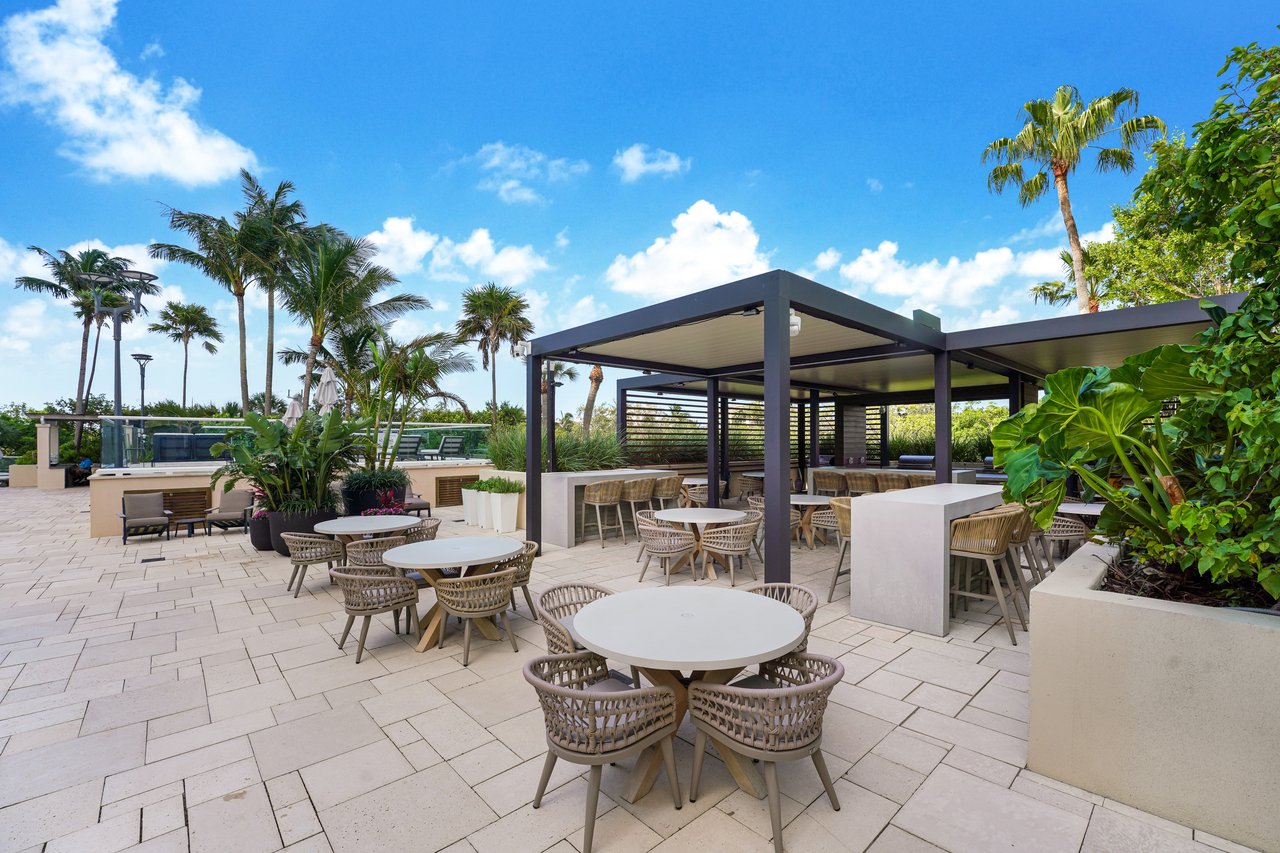
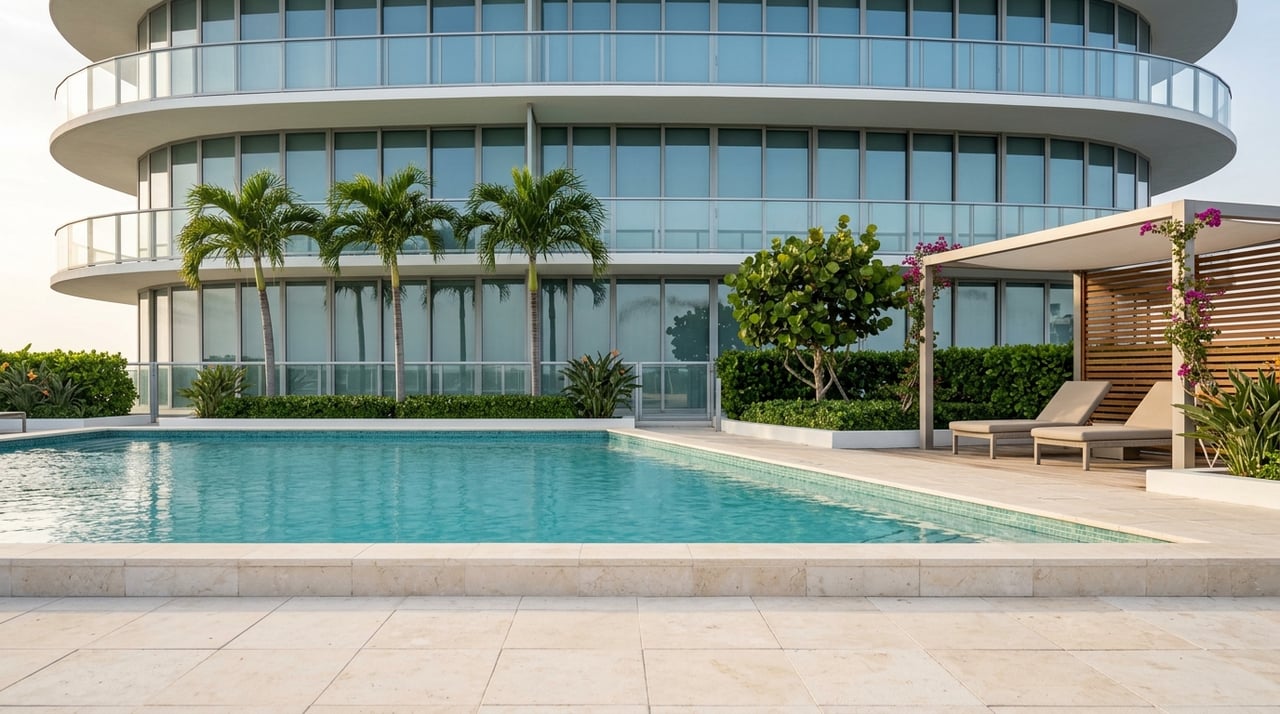
The amenity wing is the visible part of the trade. According to reporting by Traded, Apogee's original developers skipped amenity space when the tower went up nearly two decades ago. Site plans from Sieger Suarez Architects show a 15,490-square-foot addition on the west side of the tower. The ground-floor spa level has four treatment rooms, a hammam, sauna, steam room, lockers, a juice bar and a terrace lounge. Above it are a meeting room and a roof terrace overlooking South Pointe Park.
The less visible part is legal clarity. The site's history goes back to a 2004 settlement between the city and the developers, which grew out of litigation that included claims under the Bert J. Harris Private Property Rights Protection Act. Under that settlement, land was exchanged and the property took its unusual shape. The code was then amended to give this parcel its own development rights, described as the FAR needed to reach 305,500 square feet. The applicant's attorneys now write that "the Code provisions as written today make it difficult to determine exactly what development rights apply to the Property," and that the overlay "intends to cure this by establishing clear regulations." The same filing would also make the existing service-level parking garage layout legal as built.
So for 30 years of rental flexibility, the association would get a spa, clear rules for its site, and a cleaned-up garage. Whether that is a good deal depends on who owns the unit. An owner who lives there full time loses nothing they were using and gains a hammam. An owner who counted on short-term income loses the income stream itself. The filing does not resolve that split. Traded's report on the filing does not describe an owner vote, a special assessment or a financing plan for the addition.
Two tools that restrict rentals in different ways
Florida already has a standard way for a condominium to limit rentals, and it comes with built-in protection for current owners. Under Section 718.110(13) of the Florida Statutes, a declaration amendment that bans rentals, changes rental length or limits how often units can be rented applies only to owners who consent to it and to owners who take title after it becomes effective. An amendment becomes effective when it is properly recorded in the county public records.
The overlay uses a different tool. Its covenant would run with the land, in a form approved by the city attorney, for 30 years, and it would cover "no residential units on the property." The draft ordinance says the property owner signs it "at the owner's sole discretion." The research does not show who signs for a 67-unit condominium, what vote the association needs, or how the covenant would interact with Section 718.110(13). Those are questions for the association's counsel and for a buyer's own attorney. What a buyer can confirm is that the city covenant and the condo statute are two separate legal paths, and the overlay was drafted around the first one.
There is a reason for a buyer to care now. Under Section 718.110(13), a buyer who closes after a rental-restriction amendment takes effect is bound by it, while a current owner who did not consent is not. A recorded covenant could also outlast the next several sales of the same unit.
Where it stands on October 4, 2026
The schedule has already slipped once, and it is likely to slip again.
- September 8, 2026: Traded's August 20 report expected a Planning Board hearing on this date. Instead, the board voted 7–0 to continue both files to October 6 without a vote on the merits.
- September 26, 2026: Apogee's land use attorney, Michael Larkin of Bercow Radell Fernandez Larkin & Tapanes, asked for a further continuance to November 3, "in furtherance of obtaining additional neighbor support."
- October 1, 2026: The Miami Beach Gazette reported that the Planning Board, chaired by Brian Elias, was considering continuance requests on the South Pointe Overlay items.
- October 6, 2026: The item is on the Planning Board's published agenda.
- After the Planning Board: As a Comprehensive Plan amendment, the request still needs approval from the Mayor and City Commission.
The applicant has said publicly that it wants more neighbor support. We found no attributed opposition in the record. No staff recommendation on the merits has been published yet.
What to pull before an offer in any South of Fifth tower
The trade Apogee is proposing could be proposed by any building that wants floor area badly enough. That means rental status is something a buyer should check, not assume.
- Look the address up on the city's authorized short-term rental list, and keep in mind that the list itself is undated.
- Ask whether the specific unit holds a Vacation/Short-Term Rental Business Tax Receipt and a Resort Tax account.
- Read the declaration and any recorded amendments for minimum lease terms and how often units can be rented.
- Ask the association, in writing, about pending land use applications, covenants or proposed rental-restriction amendments.
- Check the Planning Board and City Commission agendas for the building's address before the inspection period ends.
The stakes for getting this wrong are high. The city's code compliance page says a Special Magistrate can impose fines of up to $1,000 a day for a first offense and up to $5,000 a day for a repeat offense.
Quick answers
Does the overlay affect other South of Fifth buildings? As drafted, no. The boundary matches 800 South Pointe Drive.
Would residents of other buildings get anything? The plaza required as a condition of the bonus would be open to the public. The amenity building would be for Apogee residents only.
Is the covenant in effect? No. As of October 4, 2026, the overlay has not had a Planning Board vote on the merits, and a continuance to November 3 has been requested.
If you are weighing a South of Fifth tower where rental flexibility is part of the math, Adrian Burke can help you pull the city records, condo documents and hearing calendars for that address before you sign. Book a Private Consultation to review your building's rental status with Adrian.