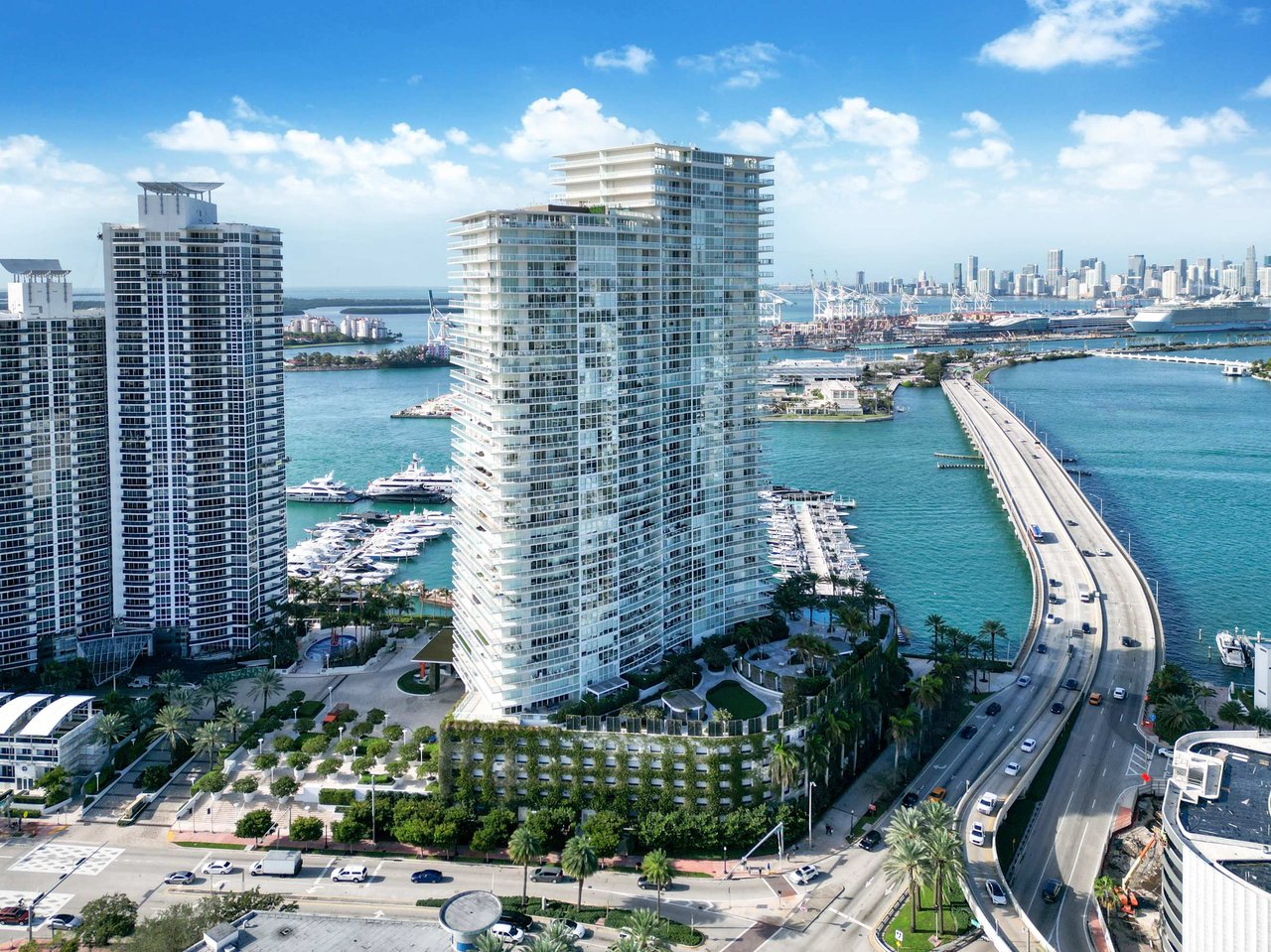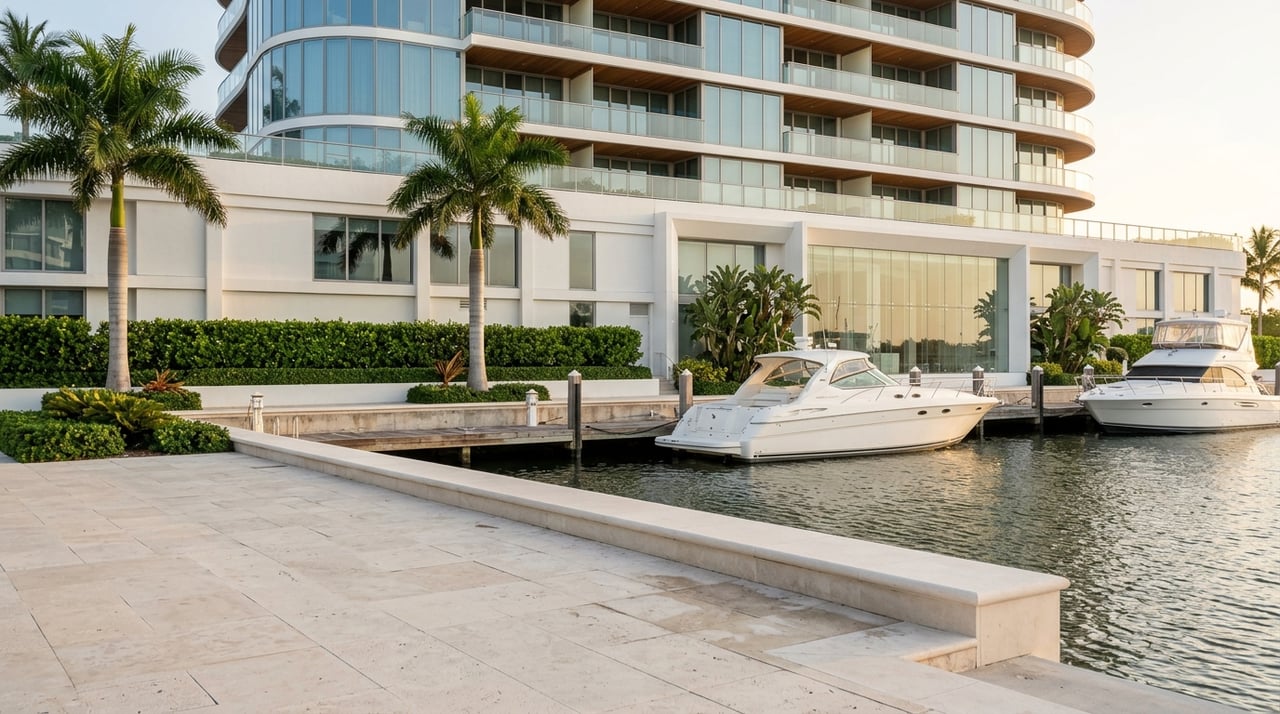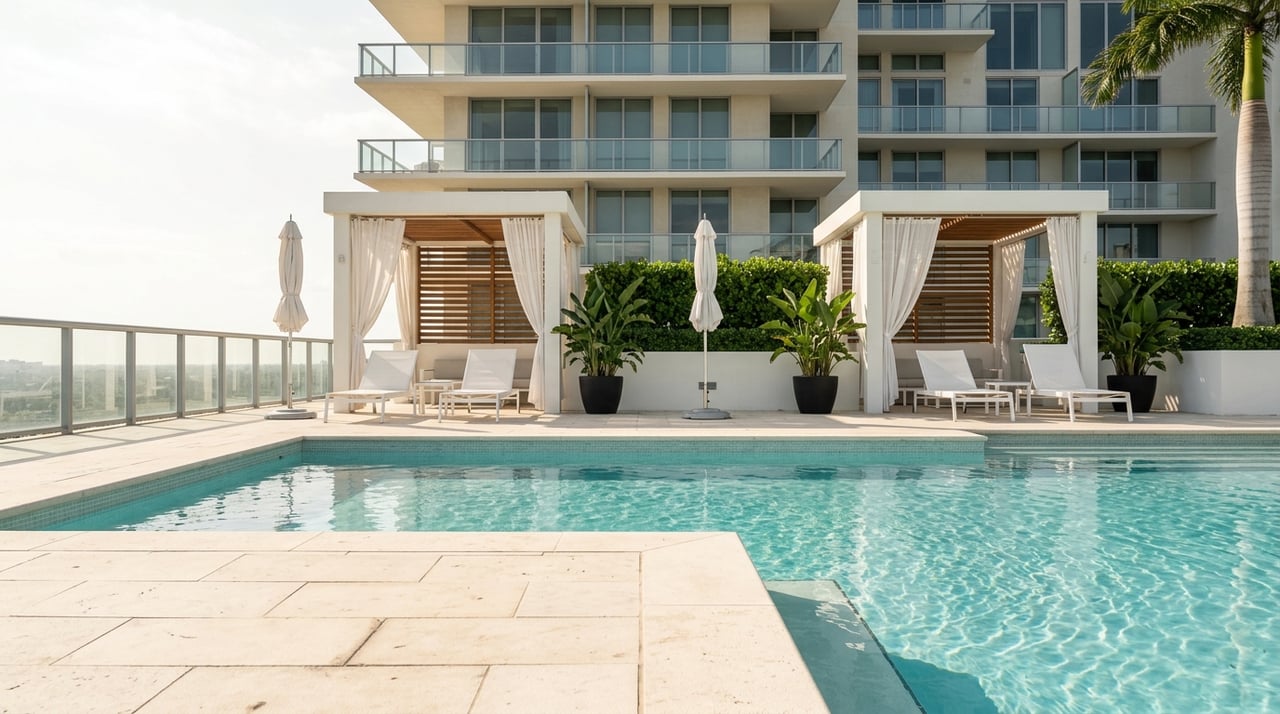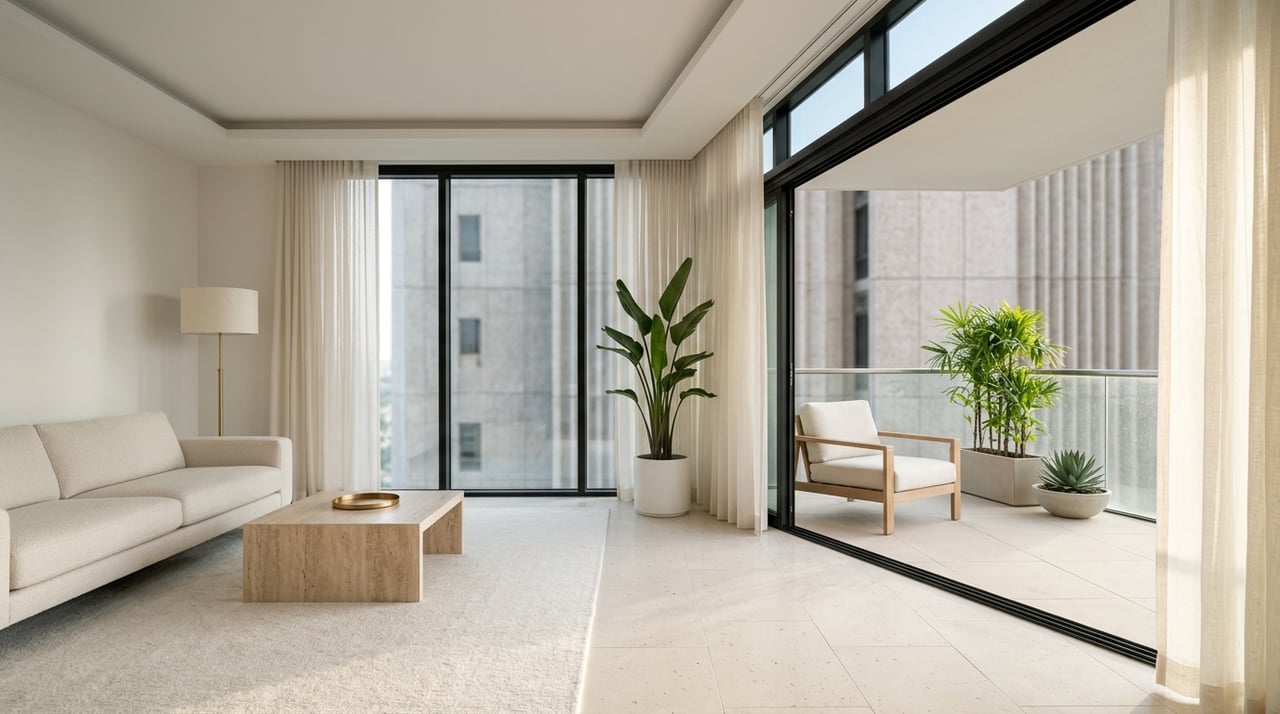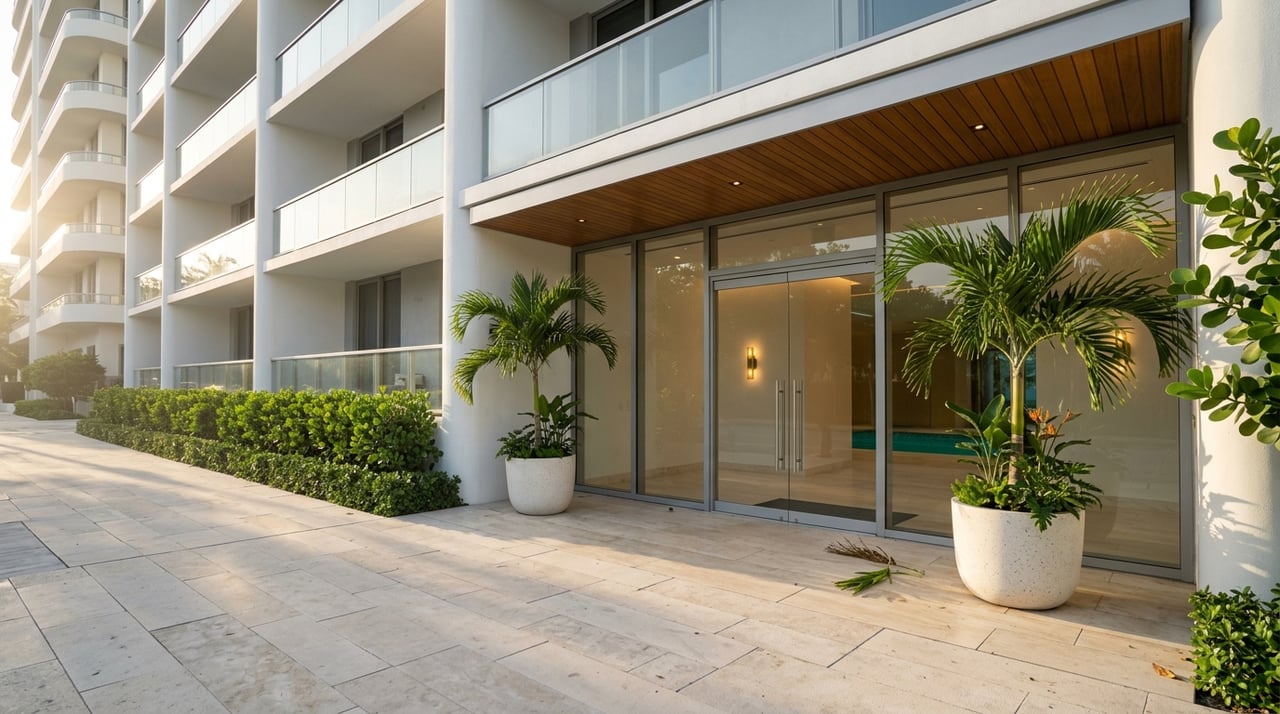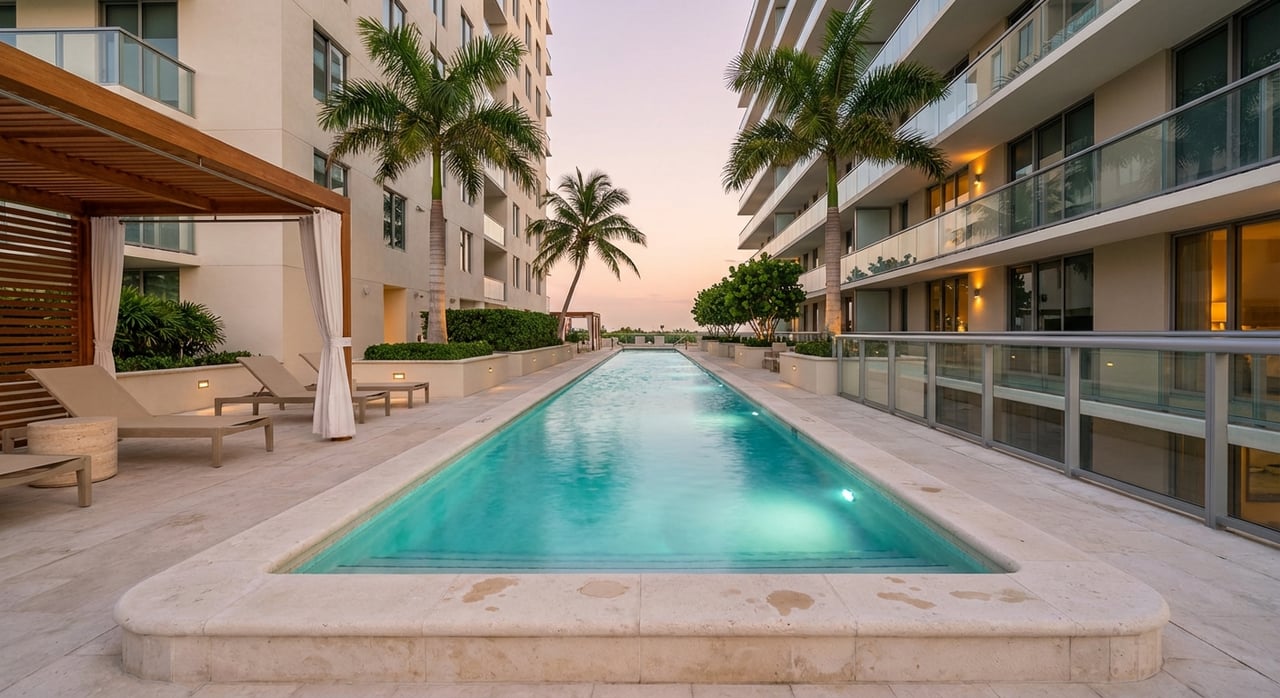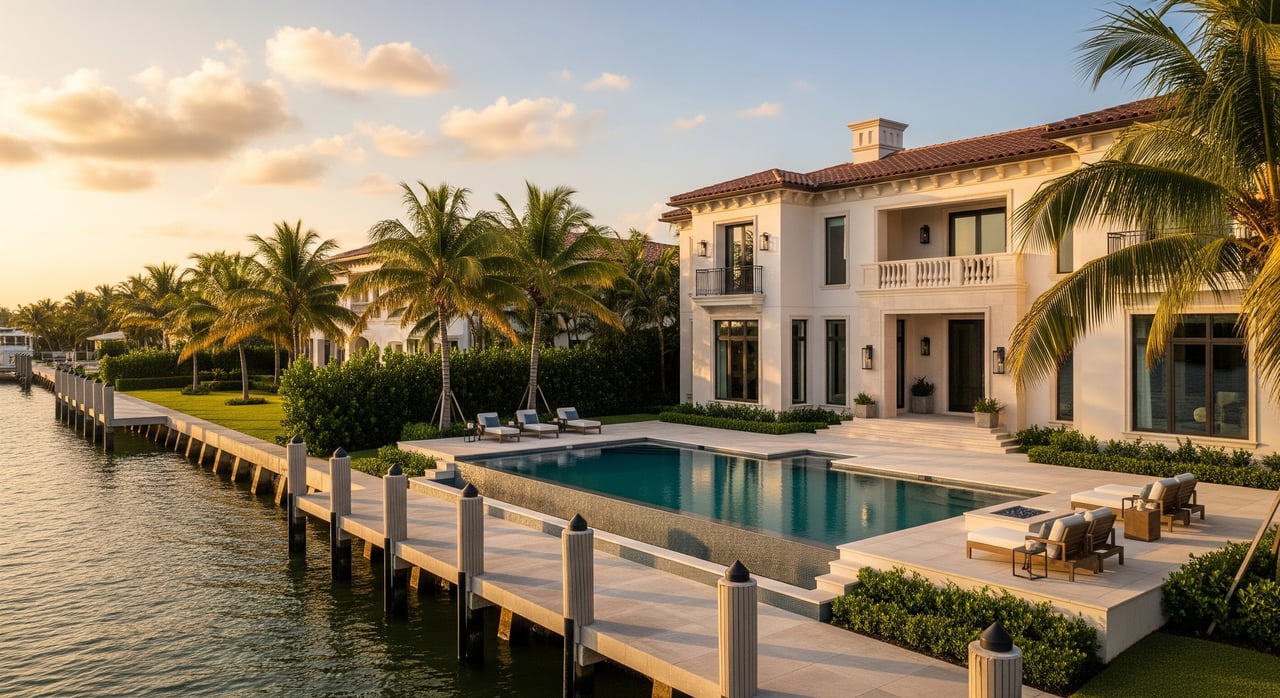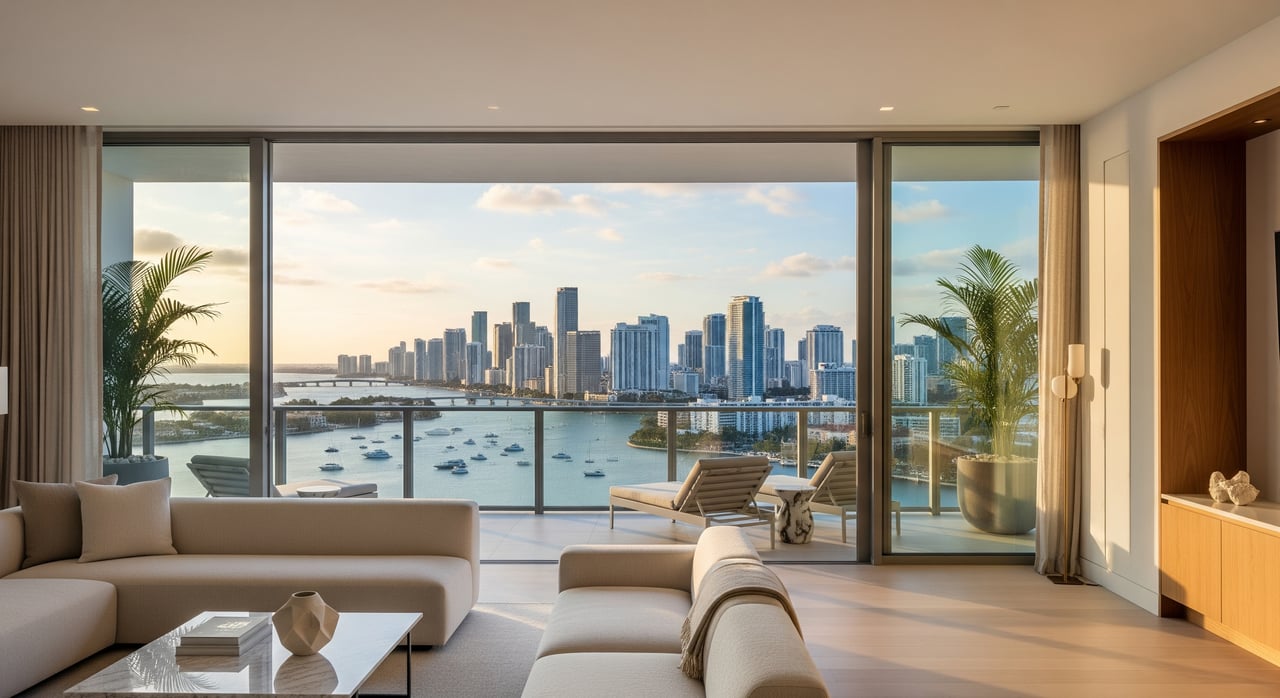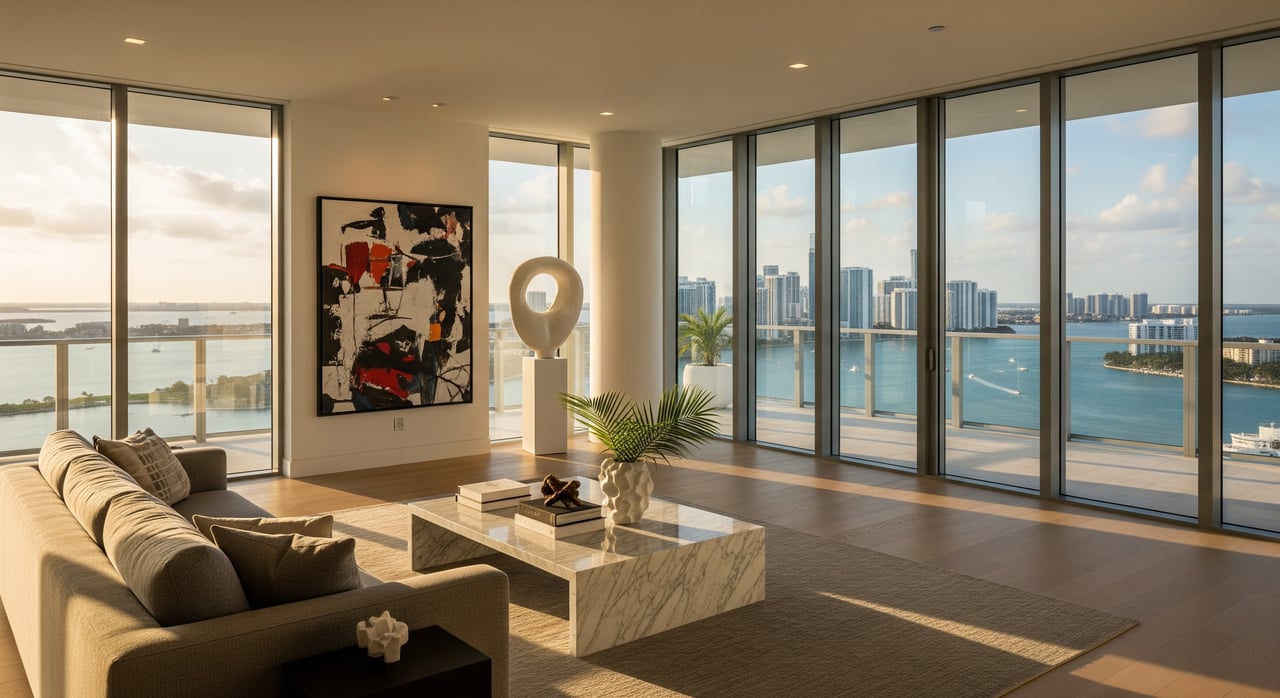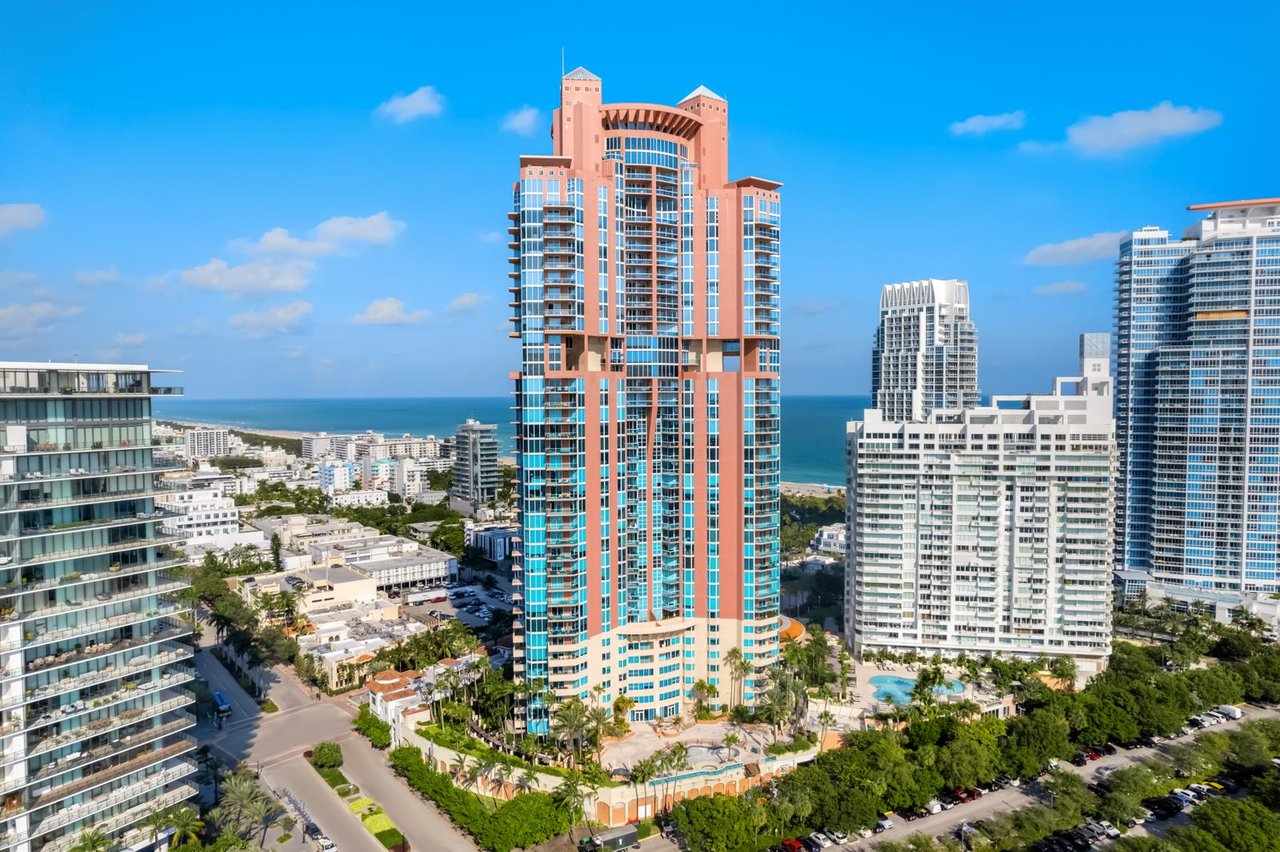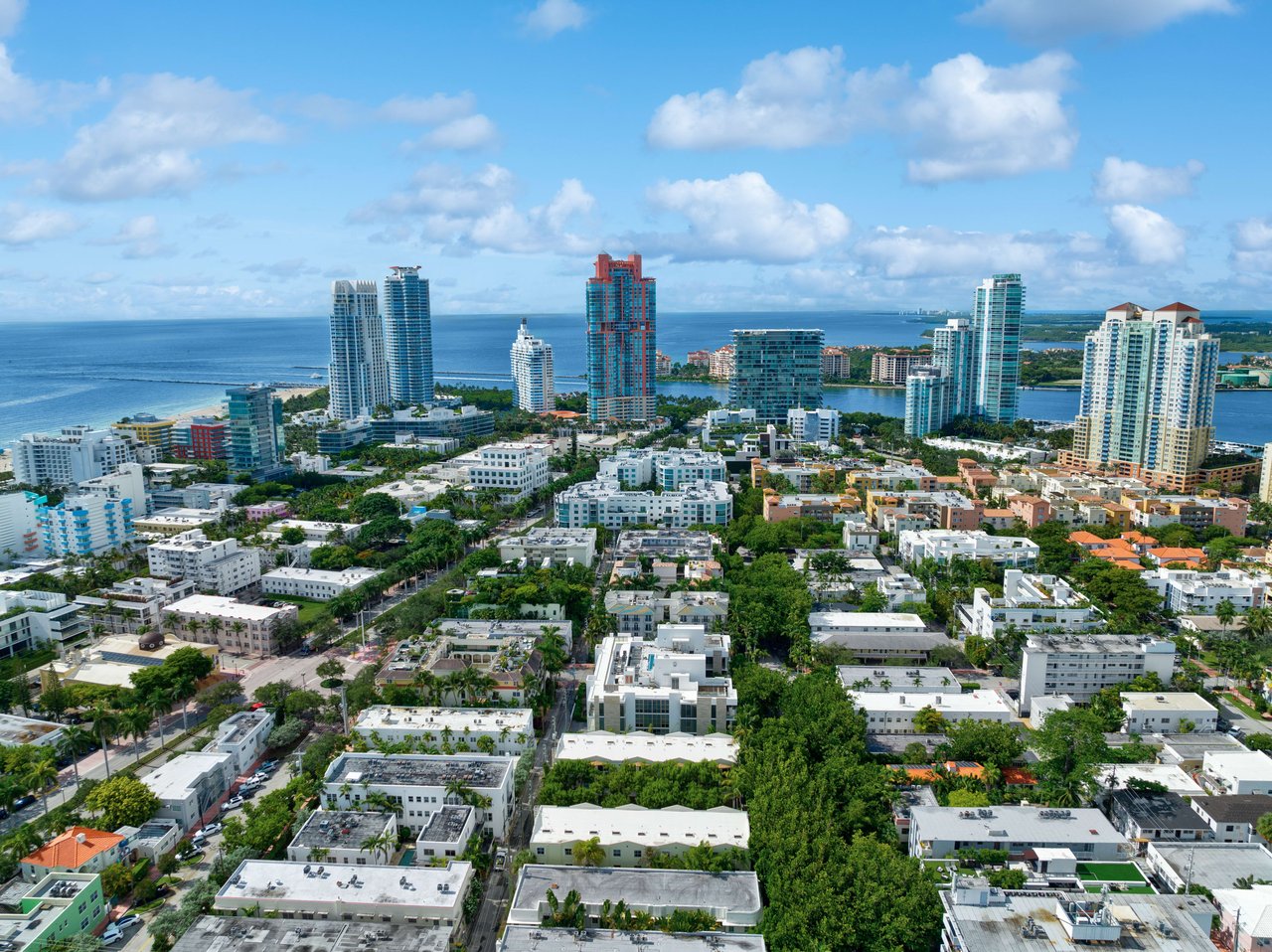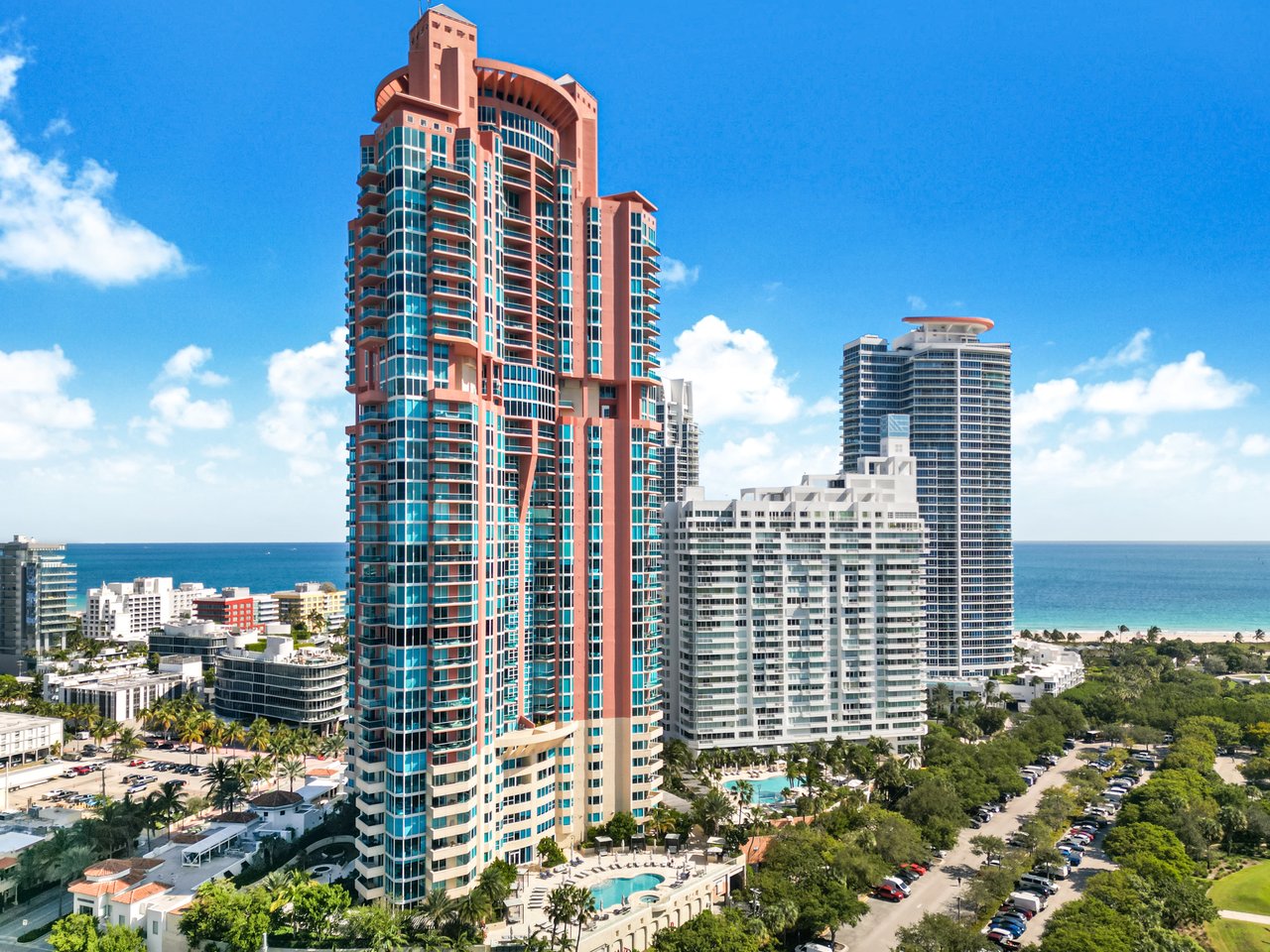
Portofino Tower condo owners often look at active listings inside the building and assume those asking prices support their own value.
That is understandable. Active listings are visible. They feel current. They show what other owners hope to get.
But active listings are not accepted market value.
For a Portofino Tower condo owner, the more useful question is not, “What are my neighbors asking?” The better question is:
What actually closed, what rented, what failed, what had to be reduced, and which type of Portofino residence did each example represent?
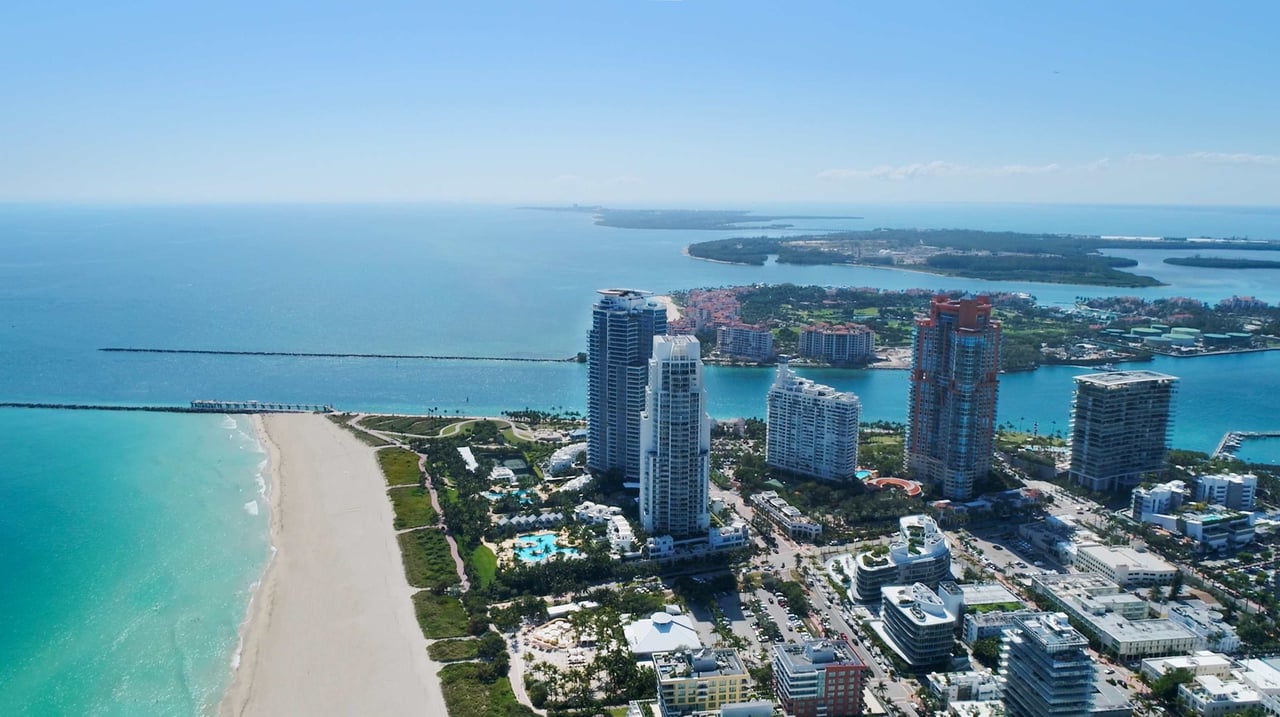
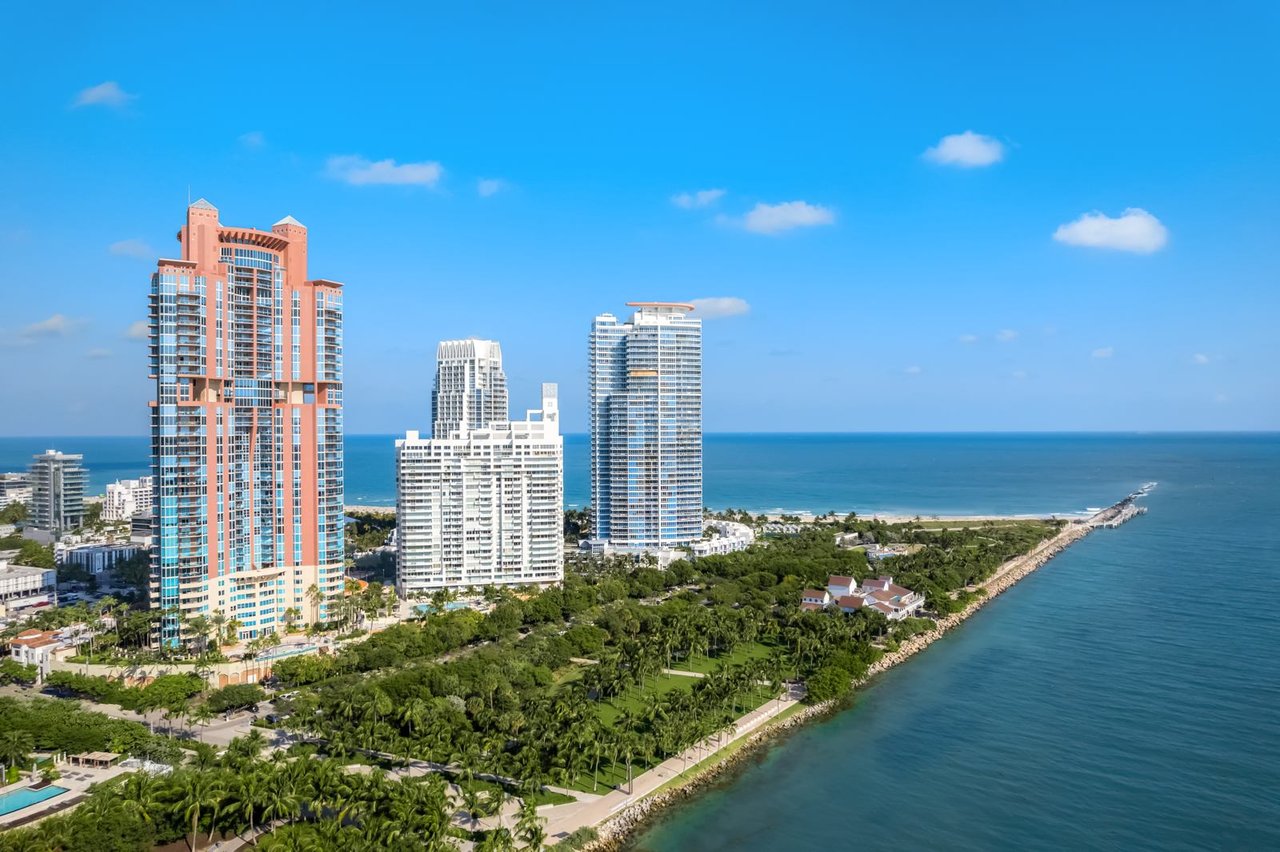
That distinction matters at Portofino Tower, 300 South Pointe Drive in Miami Beach, because the building is not one simple price-per-square-foot market. A lower-floor residence, a terrace residence, a high-floor sky residence, a renovated line, a dated line, a penthouse, and a rental listing are all read differently by buyers and tenants.
South of Fifth is still a cash-heavy market. But cash buyers are not careless. Serious buyers review the residence, the building, the rules, the financials, the meeting minutes, the assessments, the insurance context, the construction timeline, and the recent sales.
When a residence is priced correctly, Portofino can still move. When a residence is mispriced, the market usually exposes it.
Quick Take for Portofino Tower Condo Owners
Before selling, leasing, preparing a new MLS launch, or holding at Portofino Tower, these are the main lessons to understand:
Active listings show seller expectations.
Closed sales and rented leases are better evidence of what buyers and tenants have actually accepted.
Portofino should not be priced by bedroom count alone.
Line, floor, square footage, view, condition, outdoor space, and listing history all change the read.
Stale listing history can become buyer leverage.
Once a residence has been exposed, reduced, relaunched, and reduced again, buyers can use that history in negotiation.
Correctly positioned residences can still outperform.
Portofino has examples of residences selling at or above final list when product, price, and timing aligned.
South of Fifth is cash-heavy, but cash buyers still discount risk.
Construction, assessments, building uncertainty, and stale history can affect what disciplined buyers are willing to pay.
Rental overpricing can be expensive.
Vacancy, lease term, furnishings, annual versus seasonal strategy, and tenant alternatives all matter.
In This Guide
Use these sections to jump to the part of the Portofino Tower pricing conversation that matters most to you.
- Active asks vs. accepted market value
- How to price before relying on active listings
- How overpricing can cost a Portofino seller money
- Why Portofino Tower is not one product
- Residence 303 and Residence 405 pricing lessons
- Cash buyers, building diligence, and buyer leverage
- Rental vacancy, annual leases, and seasonal risk
- Why changing brokerages does not fix a rejected price
- How Portofino fits into the broader South of Fifth market
- FAQ for Portofino Tower condo owners
Active Listings Are Expectations, Not Accepted Value
Active listings are useful. They show what a seller is competing against.
But active listings do not prove value.
A Portofino condo owner who only studies current asking prices may accidentally confuse seller ambition with buyer acceptance. That mistake feels rational in the moment because active listings are visible, current, and easy to compare — but they may be showing what sellers hope to achieve, not what buyers have agreed to pay.
In a broader South of Fifth review, active asking prices were meaningfully above recent accepted sale prices in several price bands:
Price Band | Active Ask vs. Closed Sale Price Per SF |
|---|---|
$500K–$1M | +3.3% |
$1M–$2.5M | +24.2% |
$2.5M–$5M | +24.9% |
$5M–$10M | +15.2% |
$10M+ | +19.3% |
Seller ambition vs. buyer acceptance in South of Fifth: In the $1M–$2.5M and $2.5M–$5M South of Fifth price bands, active asking prices were roughly 24% above recent accepted closed-sale price-per-square-foot evidence. That does not mean every active listing is overpriced. It means there was a meaningful seller ambition versus buyer acceptance gap in the reviewed data.
This gap is where the Price-Ceiling Trap usually starts. A seller may look at active penthouse, townhouse, combined-residence, terrace, renovated, or sky-residence pricing and borrow the psychology without matching the product. The result is an active market that can look like proof of value, even when recent closed sales show a lower level of buyer acceptance.
How to read this table: Active inventory should be treated as competition, not proof of value.
Condo owner takeaway: Before pricing at Portofino Tower, compare active asks against closed sales, failed listings, and the exact product bracket of the residence.
How to Price a Portofino Tower Condo Before Relying on Active Listings
- Treat active listings as competition, not proof of value.
- Separate active listings from closed sales.
- Separate closed sales from failed, expired, cancelled, and withdrawn listings.
- Separate rented leases from failed rentals.
- Identify the exact Portofino product bracket: square footage, floor, line, view, outdoor space, condition, and listing history.
- Adjust for building context, construction, assessments, buyer diligence, and current competing inventory.
- Ask whether the price is likely to create buyer competition — or simply invite buyers to wait.
Generic comp math rarely gives a Portofino condo owner the full picture.
How Overpricing Can Cost a Portofino Seller Money
The goal of a higher asking price is usually simple: make more money.
That is understandable. Most owners who want to test a higher price are not trying to make a mistake. They are trying to protect their equity, leave room to negotiate, and avoid selling for less than they believe the residence is worth.
The issue is that the market does not reward a high asking price simply because it is high. The market rewards a price that creates buyer belief, urgency, and competition.
When a Portofino residence is priced too far above accepted evidence, the opposite can happen. Instead of making the seller more money, overpricing can create:
- Fewer showings
- Fewer serious offers
- More days on market
- Higher carrying costs
- Stale listing history
- More buyer negotiation leverage
- Fewer realistic buyers
- More pressure from better-priced residences that sell first
- New lower comparable sales inside the building
That is why the better question is not, “How high can we ask?”
What price gives us the best chance to create buyer competition before time, carrying cost, and listing history start working against us?
At Portofino Tower, that distinction matters because buyers can compare active listings, closed sales, failed listings, building documents, construction timelines, assessments, and recent price reductions before they make an offer.
A high asking price only helps if it creates a better result. If it reduces demand, extends the timeline, and gives buyers more leverage, it may be doing the opposite of what the seller intended.
Portofino Tower Is Not One Product
One of the biggest mistakes at Portofino Tower is pricing by bedroom count alone.
A 2,340 SF terrace residence does not trade the same way as a lower-floor 2,340 SF residence without meaningful outdoor space. A high-floor sky residence does not trade the same way as a lower-floor residence with a limited view. A penthouse, townhouse, or combined residence may help define the building’s upper price context, but it should not be used casually to price normal-stack inventory.
For public pricing conversations, I would separate Portofino into product brackets like:
Product Type | Why It Matters |
|---|---|
Large 1-Bedroom Residences / 1,160 SF | Entry Portofino ownership and rental product. |
1-Bedroom + Den Residences / 1,090–1,160 SF | Flexible-use product, depending on exact line and square footage. |
Large 2-Bedroom Residences / 1,960–2,040 SF | Larger core product; needs floor, view, and condition adjustment. |
Large 3-Bedroom Residences / 2,340 SF | One of the most important Portofino condo owner and landlord categories. |
Terrace / Lanai Residences / 2,340 SF + Outdoor Space | Outdoor space creates scarcity, but it must be valued separately. |
Sky Residences / 1,960–2,550 SF | High-floor, view, and elevation premium. |
Penthouse / Townhouse / Combined Residences | Price-ceiling and scarcity context, not direct comps for normal-stack residences. |
How to read this table: Portofino is not one uniform market. Product type, floor, view, condition, terrace space, and listing history can materially change the value read.
Condo owner takeaway: The right first question is not the average price per square foot. It is how today’s buyer or tenant would value your specific line, floor, view, condition, square footage, outdoor space, and building context.
What would today’s buyer or tenant pay for this specific line, floor, view, condition, square footage, outdoor space, and building context?
Portofino Tower Residence 303 — Lanai / Oversized Terrace Pricing Lesson
Portofino Tower Residence 303 is one of the clearest examples of how a higher asking price can backfire when the market does not believe it.
This was a Terrace / Lanai Residence with approximately 2,340 SF of interior space plus a large outdoor terrace. It originally came to market around $4.5M in December 2022 and ultimately closed around $1.9M in April 2024 after a long reduction path.
That history matters because the residence did not simply sell lower. It spent a long period teaching buyers that the earlier price was not being accepted.
An independent appraisal from Prism Appraisal Group / Brian Bub later supported a value near $1.962M as of February 1, 2024, which was close to where the market ultimately cleared.
Based on the pricing lane I would have expected for that product at launch, roughly $2.75M to $2.90M, the owner may have missed approximately $850K to $1M in gross sale-price opportunity before considering carrying costs.
During that long exposure window, HOA and property tax exposure alone was roughly $107K to $108K, before insurance, utilities, repairs, assessments, or opportunity cost.
That is not framed as a guaranteed net loss. It is a pricing lesson.
When a seller misses the realistic sale window, the cost is not only the eventual reduction. The cost can include:
- Months of carrying expense
- Reduced buyer urgency
- Stale listing history
- Increased negotiation pressure
- New lower comparable sales
- The fatigue of chasing the market after the market has already moved
For Portofino condo owners, Residence 303 is the reminder that outdoor space matters — but it does not override market discipline.
Portofino Tower Residence 405 — Large 3-Bedroom Listing-History Lesson
Portofino Tower Residence 405 shows a different version of the same problem: when a listing stays exposed long enough, the price history can become buyer leverage.
This was a Large 3-Bedroom Residence / 2,340 SF. The residence had prior exposure around the low-$2M range, later relaunched through reductions, and ultimately closed around $1.619M.
Against an earlier market lane of approximately $2.0M to $2.15M, that suggests roughly $380K to $530K in missed gross sale-price opportunity.
The broader exposure window also carried meaningful HOA and property tax exposure, although there may have been rental offsets.
The point is not to criticize the owner. The point is that buyers can read history.
Once a listing has been exposed, reduced, relaunched, and reduced again, that history becomes part of the negotiation. Buyers may start asking:
- Why has this not sold?
- What did previous buyers reject?
- Is the seller now more flexible?
- Are there building issues, condition issues, pricing issues, or timing issues?
- Why should I pay more than the last serious buyer was willing to pay?
That is how stale history becomes leverage.
Overpricing often creates fewer showings and fewer offers to choose from. Without buyer competition, the seller loses leverage.
Thinking About Selling or Leasing at Portofino Tower?
Before setting price, request a private Portofino line-specific value read based on your residence’s line, floor, view, condition, square footage, listing history, current competition, and building context.
Portofino Can Still Outperform When Product and Pricing Align
This is not a negative read on Portofino Tower.
The better read is that buyers are disciplined. When product, pricing, and timing align, Portofino can still produce strong outcomes.
Portofino Tower Residence 305, another terrace-style residence, sold at its $2.25M list price in approximately 15 days, with special-situation context. Portofino Tower Residence 3603, a high-floor sky residence of approximately 2,550 SF, sold above list, closing around $3.3M after being listed around $3.199M.
Older examples show the same principle. Portofino Tower Residence 502, MLS R2982952, and Portofino Tower Residence 505, MLS M1512488, both show that a residence can sell above final list after a reset into a buyer-acceptable lane. That does not prove the original higher expectation was right. It shows that buyer competition usually appears after the market believes the price is credible.
You do not need to underprice blindly. But you do need to price in a way that creates belief.
When buyers believe the price is credible, they engage.
When buyers believe the price is aspirational, they watch.
Deep Resets Show When Original Expectations Were Rejected
A closing does not automatically validate the original asking price.
Some Portofino residences ultimately sold, but only after the original expectation was rejected and the market forced a reset.
Residence | Pricing Pattern | Seller Lesson |
|---|---|---|
Portofino Tower Residence 1505 | Original ask around $4.85M, later reduced, closed around $3.61M cash after extended exposure. | A sale can still happen after a reset, but the original expectation was not accepted. |
Portofino Tower Residence 1902 | Original ask around $2.699M, reduced, closed around $2.1M cash. | Renovation and view still need accepted-market discipline. |
Portofino Tower Residence 3204 | Original ask around $3.15M, reduced through multiple price lanes, closed around $2.15M. | High-floor appeal does not erase price resistance. |
How to read this table: The question is not only whether a residence sold. The better question is how much resistance the owner had to absorb before the market accepted it.
Condo owner takeaway: A price reset can work, but the original exposure history does not disappear. Buyers can see it, and they can use it.
How much market resistance did the seller have to absorb before it sold?
South of Fifth Is Cash-Heavy, But Cash Buyers Are Not Careless
South of Fifth is a cash-heavy condo market.
In the broader South of Fifth data reviewed, approximately 80% of closed sales were cash, while conventional financing represented a smaller but still meaningful portion of the market.
Portofino appeared even more cash-heavy in the focused sample, with cash making up roughly 84% of closed sales reviewed.
Cash-heavy does not mean price-insensitive.
Cash buyers can move quickly when value is clear. They can waive financing uncertainty. They can close with fewer lending complications. But many cash buyers are also financially disciplined. They understand opportunity cost. They compare risk. They read building documents. They look at stale history. They know when a seller has been sitting.
In the deepest original-list-price reset bucket, conventional financing participation was lower and median market time was much longer. The practical read: the more a listing had to reset from its original expectation, the more it tended to depend on cash buyers who understood the leverage.
For Portofino sellers, the danger of overpricing is not only a lower eventual price. It can also reduce the number of realistic buyers prepared to act.
Once the serious buyer group narrows, the remaining buyers may be the most disciplined buyers in the room.
Related guide: South of Fifth Cash Buyer Market — Coming Soon
Condo Buyers Are Reviewing the Building, Not Just the Residence
In South of Fifth, buyers are not only buying views, square footage, and finishes.
They are buying into a building.
That means they are reviewing more than the kitchen, the balcony, and the lobby. The condo contract and diligence process can bring building documents, rules, budgets, financial reports, meeting minutes, insurance information, assessments, milestone-related information, reserve studies, and SIRS-related materials into the conversation.
This is especially important in a post-Surfside, post-SIRS Florida condo market.
A buyer may love a residence and still ask hard questions about:
- Current and future assessments
- Reserves
- Insurance
- Building projects
- Construction timelines
- Access or amenity interruptions
- Meeting-minute issues
- Rental restrictions
- Approval timelines
- Comparable sales inside the building
Sellers cannot assume building friction will stay hidden.
Cash buyers are not automatically less careful. Many are more careful because they bring their own discipline instead of waiting for a lender to create it.
Related guide: South of Fifth Condo Assessments and SIRS Guide — Coming Soon
Construction, Assessments, and Moving Parts Make Correct Pricing More Important
Construction, assessments, insurance renewals, SIRS/reserve planning, amenity interruptions, and routing changes do not automatically make selling the wrong move. They do, however, change the strategy.
For one Portofino Tower condo owner, the cleaner move may be selling before buyer questions harden into objections. For another, it may be leasing through the work. For a third, it may be holding — but only with a realistic view of carrying cost, project timing, and future comparable sales.
The key is pricing for the market the owner is actually entering — not the market they wish existed.
Recent Portofino / South Pointe Master Association materials reviewed for this market read included several important building-context items, including reserve/SIRS planning, a capital improvement / reconstruction assessment, entry feature work, and active front-entry / paver / ramp / routing updates.
Those items do not automatically kill demand. But they do affect how buyers think.
Buyers generally prefer:
- Predictable expenses
- Stable building operations
- Clear project timelines
- Fewer unknowns
- Clean access
- Reliable amenity expectations
- A clear explanation of what has already been handled versus what may still be coming
When there are moving parts, many buyers expect a discount for accepting uncertainty.
The risk for sellers is that the most discounted residences often sell first. Once those residences close, they become new comparable sales inside the building.
That can pull the valuation conversation lower for other active owners who waited too long or stayed too aggressive.
That is what chasing the market downward looks like.
Rental Lessons: Vacancy Can Cost More Than the Premium
The sale market is not the only place where expectations get tested. The rental market does it too.
At Portofino, the $10K–$15K annual rental lane has behaved differently from the higher luxury rent bands. Once landlords push into the $15K–$30K range, the ask needs to be justified through view, condition, furnishings, term, timing, and tenant use case.
For more background, see the existing Portofino Tower Miami Beach Rentals Guide.
Residence | Rental Pattern | Lesson |
|---|---|---|
Portofino Tower Residence 1501 | Originally around $35K, reduced, rented around $25K after extended exposure. | Vacancy and reduction can cost more than the premium the landlord was trying to capture. |
Portofino Tower Residence 1604 | Originally around $16K, later rented around $11,995 after more than 100 days. | A cleaner reset can still work, but delay matters. |
Portofino Tower Residence 3601 | Higher-floor rental reduced before renting around $17K after long exposure. | Elevation helps, but it does not eliminate vacancy risk. |
Portofino Tower Residence 705 | Failed lease exposure after reducing from a higher ask. | Tenant resistance is market feedback. |
Portofino Tower Residence 405 | Prior ask around $11,900, accepted around $11,500 after 38 days. | Useful lower-floor 2,340 SF annual-rent context. |
How to read this table: A higher rent target only works when the market accepts the full package: view, condition, furnishings, term, timing, and tenant use case.
Condo owner takeaway: The rent premium is only valuable if it survives vacancy. A lower accepted rent with faster absorption may outperform an aspirational rent that sits.
The higher the rent target, the more important it becomes to answer a simple tenant question:
Why should this tenant choose this residence, in this building, at this rent, for this term, right now?
If that answer is not clear, vacancy can become more expensive than the premium.
Portofino Rental Bands Show Where Friction Rises
Portofino Rental Band | Rented | Failed | Failed Share of Reviewed Rental Outcomes |
|---|---|---|---|
$10K–$15K | 60 | 16 | 21.1% |
$15K–$20K | 17 | 12 | 41.4% |
$20K–$30K | 8 | 10 | 55.6% |
How to read this table: This is not a prediction for any single residence. It compares failed rental listings with successfully rented listings in the reviewed dataset.
Condo owner takeaway: As rent targets rise, tenant resistance tends to rise too. Higher rent bands need a stronger reason for the tenant to choose that residence now.
Annual and Seasonal Leases Are Not the Same Market
Annual and seasonal leases should not be blended.
Annual leases are usually cleaner base-case evidence because the tenant is choosing housing for the full year. Seasonal leases may command a flexibility premium, but they also carry more timing risk, furnishing risk, vacancy risk, and use-case risk.
For more background, see the existing South of Fifth Rentals Guide.
In the South of Fifth rental data reviewed, annual lease listings had a lower failed share than seasonal or shorter-term listings.
Lease Type | Rented | Failed | Failed Share of Reviewed Rental Outcomes |
|---|---|---|---|
Annual / 12+ months | 150 | 64 | 29.9% |
Seasonal / short-term | 39 | 34 | 46.6% |
How to read this table: This compares failed rental listings with rented listings in the reviewed annual and seasonal datasets. It is not a forecast for any single residence.
Condo owner takeaway: Seasonal rent can look attractive, but flexibility has to be weighed against vacancy, furnishing, timing, approval friction, and use-case risk.
That does not mean seasonal strategy is bad. It means seasonal strategy needs to be priced and marketed as a different risk profile.
For a Portofino landlord, the decision should not be:
“Can I ask more seasonally?”
The better question is:
After vacancy, furnishing, wear, timing, approval friction, and uncertainty, does the seasonal strategy still create a better expected outcome than an annual lease?
At Higher Rents, Tenants Start Comparing Against Buying
At higher annual rents, especially unfurnished annual rents, some tenants start comparing leasing against owning.
This is not financial advice. It is a market-behavior lens.
Above roughly $8K to $10K per month, some tenants begin asking whether a lease makes sense compared with buying a South of Fifth condo.
At $10K to $15K per month, the lease may compete with normal South of Fifth ownership math.
At $15K to $30K per month, the landlord needs a much clearer reason the tenant should lease instead of buy, choose another building, negotiate harder, or wait.
That reason might be immediate availability, furnished convenience, renovation quality, view, floor height, layout, building amenities, lease flexibility, privacy, or avoiding a purchase decision during a short-term transition.
But the reason needs to exist.
High rent alone is not a strategy.
Changing Brokers Does Not Fix What the Market Is Rejecting
A condo owner with a stale listing may assume the answer is simply to change agents.
Better positioning, photography, access, pricing strategy, narrative, and follow-up can absolutely matter. But changing brokerages does not automatically fix a price or product-market mismatch.
In the South of Fifth data reviewed, there were dozens of sales examples where listings changed brokerages, stayed close to the same price, and still did not produce a successful result. There were similar patterns in rentals.
Changing exposure does not change what the market is rejecting.
If the issue is price, term, condition, view, building friction, timing, or stale history, the next broker inherits the same problem unless the strategy changes.
A better relaunch should answer:
- What did the prior market exposure teach us?
- Was the issue price, product, condition, access, story, or timing?
- Did buyers object to the residence or the building?
- Did tenants object to rent, term, furnishings, or approval timing?
- Is the new strategy meaningfully different, or just the same listing with a different logo?
A relaunch can work. But only if it is actually a reset.
Related guide: Why South of Fifth Listings Fail — Coming Soon
How Portofino Fits Into the Broader South of Fifth Market
Portofino does not exist in isolation.
Buyers and tenants may also compare it with Icon South Beach, Yacht Club at Portofino, Cosmopolitan, Murano Grande, Murano at Portofino, Continuum, Apogee, and other South of Fifth buildings.
But those buildings should not all be blended as if they are interchangeable comps.
Each building plays a different role.
Building / Set | Role in the Portofino Conversation |
|---|---|
Portofino Tower | Subject building and direct evidence. |
Icon South Beach | Premium support and lease-term comparison, not automatic direct pricing. |
Yacht Club at Portofino | Entry/value and rental-flexibility pressure. |
Cosmopolitan | Entry/value and cost-to-live benchmark. |
Murano Grande | Core luxury alternative and buyer comparison. |
Murano at Portofino / One Ocean / 321 Ocean / Marea | Premium context, not direct comp blending. |
Continuum / Apogee / Glass / Ocean House | Price-ceiling and high-scarcity context. |
How to read this table: The broader South of Fifth market matters, but buildings should be role-labeled. Not every luxury tower is a direct comp for every Portofino residence.
Condo owner takeaway: Use other buildings to understand alternatives, pressure, and price ceilings — not to justify a Portofino price without product-specific adjustment.
For a deeper building comparison, see Comparing South of Fifth’s Flagship Luxury Condo Towers.
Even at the highest-scarcity end of South of Fifth, prestige is a platform — not immunity.
Active asks, accepted sales, accepted rents, and failed exposure still have to be separated.
That is the discipline Portofino condo owners should bring to their own decision.
What Portofino Tower Condo Owners Should Do Before Pricing or Leasing
Before setting a sale price, preparing a new MLS launch, accepting a rental strategy, or deciding to hold, a Portofino condo owner should review the market in this order:
1. Identify the Exact Product Bracket
Is the residence a large 1-bedroom, 1-bedroom + den, large 2-bedroom, large 3-bedroom, terrace residence, sky residence, penthouse, townhouse, or combined residence?
Do not start with bedroom count alone.
2. Separate Active Asks From Accepted Evidence
Active listings show competition. Closed sales show accepted buyer value. Rented leases show accepted tenant value.
3. Study Failed Listings and Failed Rentals
Failed exposure is not useless. It shows market resistance.
A failed listing can teach you where buyers stopped believing the price. A failed rental can teach you where tenants stopped believing the value.
4. Review Building Context Before Buyers Do
Construction, assessments, reserves, SIRS-related planning, insurance, meeting minutes, rules, approval timelines, and access issues can all become buyer questions.
It is better to understand those questions before they arrive in negotiation.
5. Model Carrying Cost and Vacancy
For sellers, carrying cost matters if the listing sits.
For landlords, vacancy can erase the premium of an aggressive rent strategy.
6. Decide the Real Objective
Are you optimizing for maximum yield, speed, clean execution, optionality, privacy, or testing the market?
Different objectives require different strategies.
7. Get a Line-Specific Read
The right first step is not a generic online estimate.
It is a Portofino-specific read of your line, floor, square footage, view, condition, outdoor space, listing history, building context, and current competition.
FAQ: Portofino Tower Sellers and Landlords
Are active listings good comps at Portofino Tower?
Active listings are useful, but they are not proof of value. They show what sellers are asking and what your residence may be competing against. Closed sales and rented leases are better evidence of accepted buyer and tenant behavior.
Related guide: Portofino Tower Market Report — Coming Soon
How should Portofino Tower condo owners price their residence?
Portofino owners should price by product bracket, line, floor, square footage, view, condition, outdoor space, building context, and listing history. Bedroom count and price per square foot are not enough on their own.
Related guide: South of Fifth Condo Market Guide — Coming Soon
Why do some Portofino Tower listings fail to sell?
Listings usually fail because the market does not accept the price, condition, story, timing, building context, or product fit. The issue is not always exposure. Often, buyers do not believe the asking price is credible.
Related guide: Why South of Fifth Listings Fail — Coming Soon
Do cash buyers overpay in South of Fifth?
Not usually. South of Fifth is cash-heavy, but cash buyers are often disciplined. They may move quickly when value is clear, but they can also discount stale history, construction, assessments, insurance uncertainty, and building risk.
Related guide: South of Fifth Cash Buyer Market — Coming Soon
How do construction and assessments affect condo pricing?
Construction and assessments do not automatically prevent a sale, but they can affect buyer confidence, negotiation, and pricing. Buyers generally prefer predictable costs, clear timelines, and fewer unknowns.
Related guide: South of Fifth Condo Assessments and SIRS Guide — Coming Soon
Should Portofino Tower condo owners sell or lease during construction?
It depends on the residence, price, rental demand, carrying cost, building timeline, and owner objective. The right answer should be built around the owner’s mandate: yield, speed, privacy, optionality, clean execution, or market proof.
Related guide: Portofino Tower Rent vs Sell Guide — Coming Soon
Are annual and seasonal leases the same market in South of Fifth?
No. Annual leases and seasonal leases should be analyzed separately. Seasonal rents may look higher, but they can also carry more vacancy, furnishing, timing, and approval-risk friction.
Related guide: South of Fifth Annual vs Seasonal Rental Guide — Coming Soon
Why does listing history matter to buyers?
Buyers can see when a residence has been listed, reduced, relaunched, and withdrawn. That history can affect negotiation because it gives buyers a sense of prior market resistance and seller flexibility.
Related guide: Why South of Fifth Listings Fail — Coming Soon
What does Active With Contract or Pending Sale mean for Portofino Tower sellers?
Active With Contract and Pending Sale records can be useful signals, but they are directional until closed. Final sale price, terms, financing, concessions, and closing date matter before treating the record as accepted market evidence.
Related South of Fifth Reading
These existing guides add context to the Portofino Tower discussion:
- Portofino Tower Miami Beach Rentals
- South of Fifth Rentals Guide
- Market Trends in South of Fifth Condo Sales
- Comparing South of Fifth’s Flagship Luxury Condo Towers
- Best Time to List a South of Fifth Condo
- South of Fifth Lifestyle Guide
- South of Fifth vs Brickell Condo Lifestyle
- South of Fifth Wellness, Fitness and Outdoor Living
Coming Soon in This Portofino / South of Fifth Series
These deeper guides will expand on the specific issues raised in this Portofino article:
- South of Fifth Condo Assessments and SIRS Guide — Coming Soon
- Why South of Fifth Listings Fail — Coming Soon
- South of Fifth Cash Buyer Market — Coming Soon
- Portofino Tower Rent vs Sell Guide — Coming Soon
- South of Fifth Annual vs Seasonal Rental Guide — Coming Soon
- Portofino Tower Market Report — Coming Soon
- South of Fifth Condo Market Guide — Coming Soon
Final Thought for Portofino Tower Condo Owners
If you own at Portofino Tower and are thinking about selling, leasing, preparing a new MLS launch, or holding through construction, the right first step is not a generic estimate.
It is a private Portofino-specific read.
That means looking at your residence’s line, floor, square footage, view, condition, outdoor space, listing history, current competition, rental alternatives, building context, and realistic buyers or tenants.
The goal is not to chase the highest active ask in the building.
The goal is to understand where the market is most likely to believe you.
Request a Private Portofino Line-Specific Value Read »
Sources and Methodology
This article is based on a review of Miami REALTORS® MLS / MIAMI MLS via Matrix™ sales and rental records, Portofino Tower listing and lease history, public condo-sale and lease data, South of Fifth financing-term patterns, Portofino / South Pointe Master Association records and updates, Florida condo contract / rider / governance / association documents, and broker market-analysis opinions from Adrian Burke / ONE Sotheby’s International Realty.
Aggregated figures in this article were compiled from Miami REALTORS® MLS / MIAMI MLS via Matrix™ records reviewed by Adrian Burke. MLS records reviewed include Portofino Tower / 300 S Pointe Dr examples referenced in this article, including Residences 303, 305, 405, 502, 505, 705, 1501, 1505, 1604, 1902, 3204, 3601, and 3603.
Prism Appraisal Group / Brian Bub is referenced for the independent appraisal support related to Portofino Tower Residence 303.
Pricing lanes and gross sale-price opportunity estimates attributed to Adrian Burke are broker market-analysis opinions, not formal appraisals.
Active listings are treated as seller expectations. Closed sales and rented leases are treated as accepted market evidence. Pending Sale and Active With Contract records are treated as directional until closed. Failed listings and failed rentals are reviewed as signs of market resistance.
This article is for market-education purposes only and is not legal, financial, tax, lending, engineering, or reserve-study advice. Owners should consult the appropriate professionals for legal, tax, financing, engineering, or association-specific questions.
Last updated: June 14, 2026. Data reviewed through June 13, 2026. Market conditions, inventory, pricing, association updates, and pending sales can change.